Showing posts with label Air Pollution in Hong Kong. Show all posts

Sunday, January 28, 2018

Hazy Days Increase the Risk of Premature Death


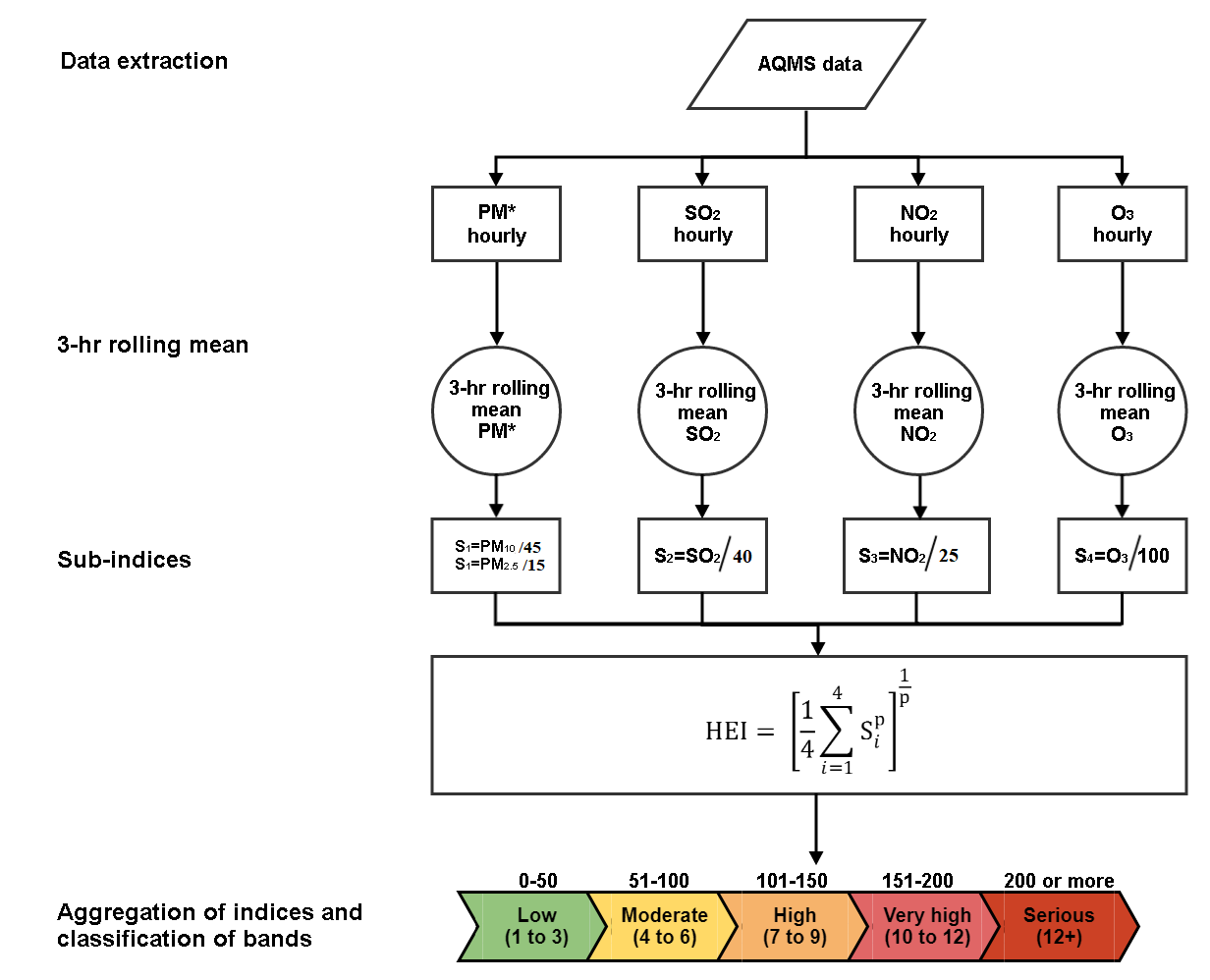
“Although a hazy day generally has 2.9% higher risk [of death] than a day without haze, a very intense adverse effect is found on the mortality associated with mental and behaviour disorders,” the researchers reported. “A combined influence of haze, extreme weather/air quality and urban environment can result in extremely high mortality.” Read the full article @ The Guardian

The Hong Kong research, published in the journal Environment International, is the first to analyse the link of haze days and risk of death. Haze days are those on which pollutants gather in the air and cut visibility, usually dry days with low winds. In the study period from 2007 to 2014, there were 111 haze days when particle pollution was on average twice as high.

Monday, July 25, 2016

821 Premature Deaths Estimated for Hong Kong in the First Half of 2016

It is time the government adopted measures to prevent more premature deaths in our beloved city. The premature deaths data were collected by the Hedley Environmental Index, published by the School of Public Health, the University of Hong Kong.

The Clean Air Network, a concerned green group in the city, said in mid-July that concentrations of nitrogen oxides in the air in the city have consistently surpassed maximum safe levels set by the World Health Organization (WHO) in the last five years. In its mid-year review, Clean Air Network said the average roadside emissions of nitrogen oxides in the city's three business districts (Central, Causeway Bay and Mong Kok) were 2.5 times higher than WHO standards.

The Hedley Environmental Index estimated that a total of 23,378 doctors' visits at government clinics and hospitals were required due to pollution-related diseases on July 10, 2016, about three times the 7,735 visits recorded on July 15, 2015. Meanwhile, the visits cost the government HK$19.8 million on July 10 alone - up more than 200 percent from HK$6.13 million a year earlier, according to the Hedley index.

In short, it is imperative for the government to take swift and bold actions to control air pollution in the city and save precious lives. Curtailing the growth of the number of private cars is one aspect the government must consider implementing urgently. A cleaner city means happier and healthier people, which is conducive to higher productivity and economic output.

Read the full article @ China Daily

Sunday, November 02, 2014

Air Quality in Hong Kong 2013


The Environmental Protection Department (EPD) today (October 31) released the "Air Quality in Hong Kong 2013" report.

Fake Backdrop of Clean and Blue Skys in Hong Kong


The report summarizes air quality data collected in 2013 by the EPD's monitoring network, which comprises 11 general and three roadside air monitoring stations. The network monitors various air pollutants, namely sulphur dioxide (SO2), nitrogen oxides (NOx), nitrogen dioxide (NO2), ozone (O3), carbon monoxide (CO), total suspended particulates (TSP), respirable suspended particulates (RSP or PM10), fine suspended particulates (FSP or PM2.5), lead and toxic air pollutants.

A 3-D Noise Map of Hong Kong Island


The spokesman stressed that Hong Kong's air quality policies are premised on the protection of public health and the Government is committed to improving air quality. The Environment Bureau released "A Clean Air Plan for Hong Kong" in March 2013, which outlines comprehensively the challenges Hong Kong is facing with regard to air quality as well as the relevant policies, measures and plans to tackle the problem. The Plan also gives a detailed account of improvement measures undertaken to tackle air pollution from land and sea transport, power plants and non-road mobile machinery and seeks to further strengthen collaboration between Guangdong and Hong Kong to deal with regional pollution.


Air Pollution in Hong Kong - November, 2012


The "Air Quality in Hong Kong 2013" report is available at www.aqhi.gov.hk/api_history/english/report/files/AQR2013e_final.pdf.

Sunday, December 22, 2013

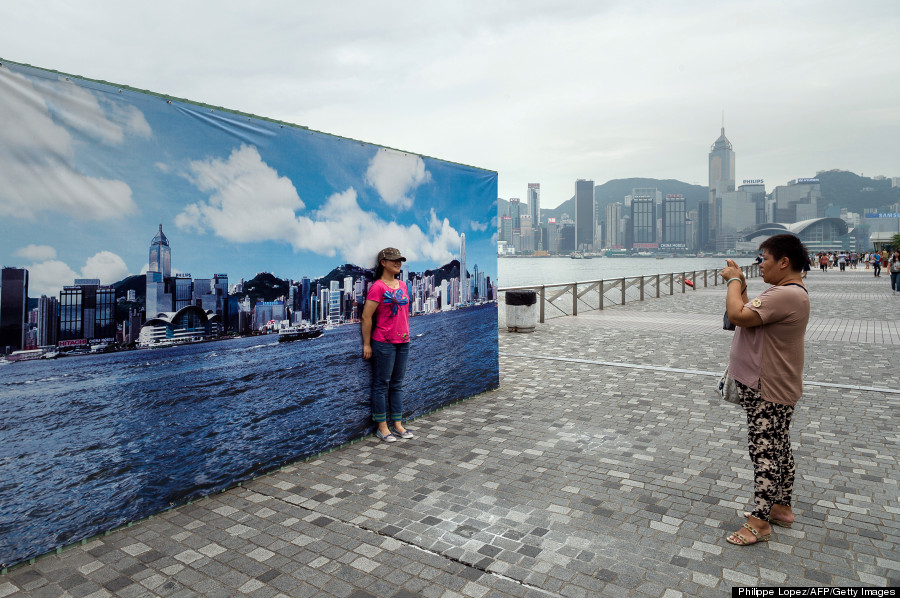
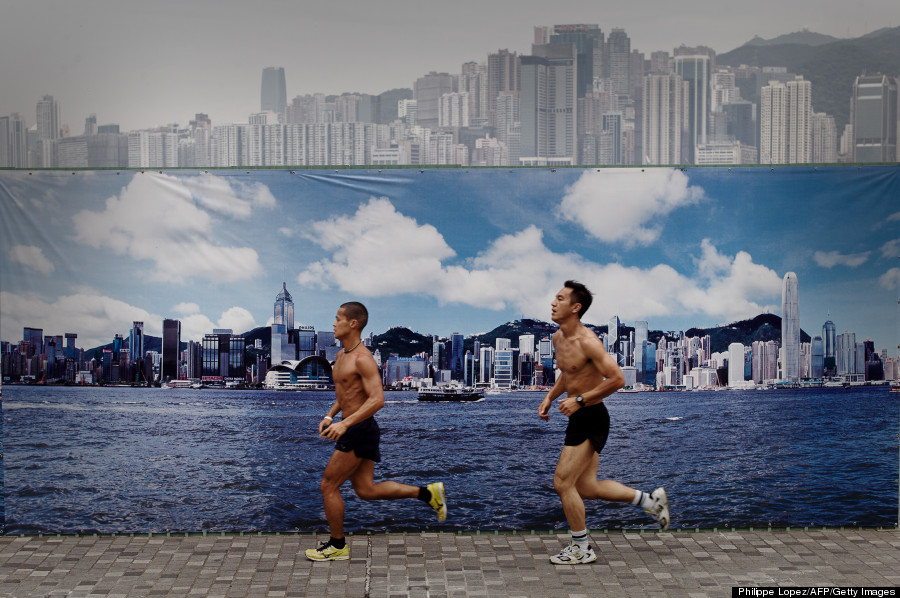
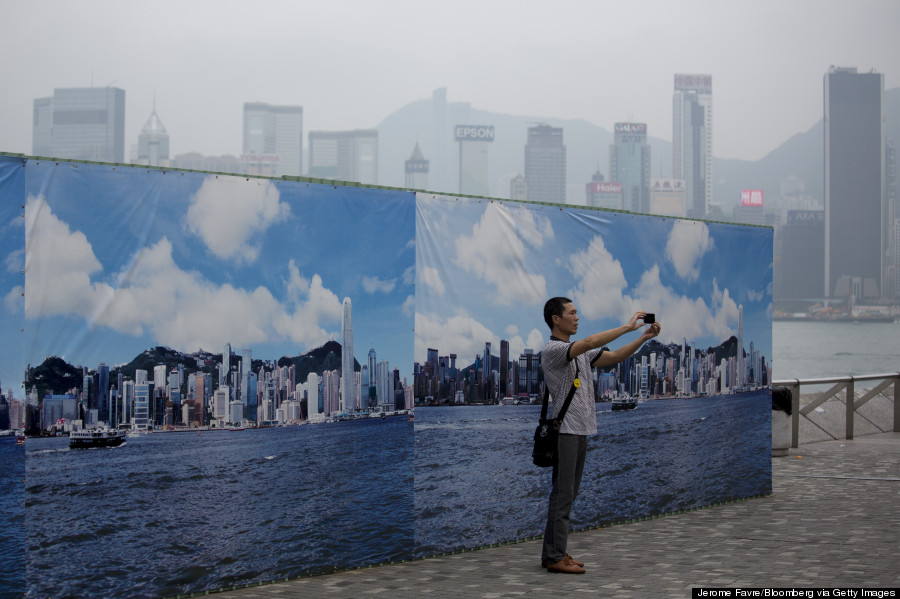
Fake Backdrop of Clean and Blue Skys in Hong Kong

Picture this: Tourists visiting one of your city's most prominent attractions are unable to see it because of smog, haze and a bevy of other airborne pollutants.

Hedley Environmental Index for Hong Kong's Air Pollution.


Real time air quality in Hong Kong.
 
What's the solution? Erect a backdrop for visitors to pose in front of. One that's impervious to pollution and projects an image of the city as always sunny and full of clean air. Welcome to Hong Kong's Victoria Harbor, where bright banners of the city's skyline block the view of its gray, polluted, real-world counterpart.

Real time air quality index in Hong Kong.

Photos from Huffington Post


Tuesday, July 02, 2013

A 3-D Noise Map of Hong Kong Island


Hong Kong's noise pollution needs taking seriously - read the full article.

Noise pollution in Hong Kong needs no research to show how serious the problem is. The pounding din of jackhammers, blaring of horns by agitated drivers, incessant drilling from renovations next door, loud phone conversation on public transport - the evidence is everywhere. However unpleasant it is, noise is considered part of city life, something that has to be put up with in a busy place like ours. Although the exposure to noise is arguably less damaging than breathing filthy air, that does not mean the problem does not warrant public attention and improvement. Excessive noise can lead to more than impaired hearing and insomnia. The need for more action is just as pressing.

Full appraisal of how serious the problem is will be a helpful step. This can be achieved by collating and analysing the noise-related complaints filed by the public. A designer in New York has produced a map of the city's noise topography, based on noise complaint details available on the city's Open Data website. Lauded as a work of art because of its visual impact, the project showed a striking disparity between rich and poor districts, which suggested noise in areas for the rich was handled by the authorities more seriously.

The European Union has mandated noise mapping for cities with more than 250,000 inhabitants since 2007. But noise complaint details are not publicised in Hong Kong. A request by this newspaper did not yield any result, with the police saying district divisions were too busy to tally the detailed figures. But overall, there were 15,692 complaints in the central districts last year. It shows that noise pollution is a serious problem.

A browse through the Environmental Protection Department website may give the impression that the authorities are doing a good job in abating traffic and construction noise. Noise mapping for certain infrastructure projects is also available, but whether the public is aware of the information is another matter. A government survey on noise impact two years ago showed that 64 per cent of the public said noise had no impact on their daily life. The finding sits oddly with the thousands of complaints received each year.

As air and light pollution get their fair share of attention, it is high time the government renewed momentum to combat noise pollution. Better education, tougher enforcement and changes in individual habits and behaviour can make a difference.

Wednesday, April 10, 2013

Walking Is An Impossible Game in Hong Kong


Simon Ng, Head of Transport and Sustainability Research of Civic Exchange was featured in HK Magazine's cover story about pedestrian planning in Hong Kong. Simon, in the article, explains how development projects make pedestrians walk longer distances, and discusses the failures of and recommendations for the pedestrian zones.
HK Magazine Cover Story - Pedestrian Planning: No Clear Path

Sunday, February 10, 2013

Can of Fresh Air in China and Hong Kong

Chinese businessman Chen Guangbiao (center) gives cans of fresh air produced by his factory to passersby for free in a financial district in Beijing.

Read the full article on NPR, February 3rd, 2013

Top 100 cities with the worst air quality in the World (WHO, 2011)

A cartoon from New York Times


A similar campaign held in Hong Kong


Saturday, August 04, 2012

Air Pollution in Hong Kong - Worst in Two Years (VoA)

Link to the post

Hong Kong residents have endured the city's worst smog in more than two years, as a typhoon far to the east caused a build up of bad air that obscured the international financial center's famous skyline.

Thursday's air pollution readings at monitoring stations around the city hit the highest levels since a dust storm smothered Hong Kong in March 2010. The government urged people with heart and respiratory illnesses to reduce outdoor activities and avoid prolonged stays in areas with heavy traffic.

Heat Makes Situation Worse

With temperatures exceeding 30 degrees Celsius, local resident Dawn Lok said she felt suffocated. "When you go out on the street with traffic during the day, it's really horrible," she said.

Lok, who works in the health and beauty industry, said she wants to stay indoors as much as possible. "When I go to work, I just take a cab, because I can't stand on the street for more than a few minutes," she said.

The government says the city suffers from two types of air pollution: street-level pollutants emitted from vehicles, and regional smog whose sources include local coal-fired power plants and factories in neighboring parts of China.

Vehicle Emissions Blamed

A local group campaigning for immediate government action to clean the air blamed the latest smog primarily on vehicle exhaust fumes. The Clean Air Network said a weather system would not be able to trap pollutants over the city if its cars, buses and trucks emitted fewer harmful gases.

Francis Moriarty, a journalist with Radio Television Hong Kong, said the factory emissions in neighboring Guangdong province also are a major problem. "When you have a holiday or there's an economic downturn in mainland China, and the factories cease running or reduce their production, you see improved quality of air in Hong Kong," he said.

Hong Kong's role as one of the world's busiest ports is another factor. "Many of those ships [that use the port] are burning very dirty diesel fuel," said Moriarty.

Incentive Program Makes Impact

Hong Kong authorities have tightened air quality targets this year to try to meet World Health Organization standards. Since 1999, the government also has been offering incentives to individuals and businesses to replace diesel taxis and buses with cleaner liquid petroleum gas (LPG) vehicles and to retrofit old diesel vehicles with particulate reduction devices.

The measures have had some success, significantly reducing the concentration of toxic particles in the air. But, nitrogen dioxide levels on city streets have remained high. Moriarty said the public wants authorities to do more.

Another Challenge for Hong Kong Leader

"The new government of Leung Chun-ying, who has just come in as our chief executive, is already under severe political stress for a number of reasons. If it wants to create some political good will in a part of the community, acting on pollution would be one way to do it," he said.

Moriarty said many residents want Hong Kong to "stand up" to Chinese authorities to demand a stop to smog blowing in from the mainland. He said air pollution also has forced local people to consider moving abroad.

"When many people in the community are having to consider this question, 'As much as I love living here, and as profitable as it may be for me, do I want to pay the price of my health and the health of my loved ones?' Then it moves beyond anecdotal," he said. "It's a real life concern."

Lok had no immediate plans to leave. "I have to say honestly that I'm quite used to this kind of pollution already," she said.

Monday, August 01, 2011

Air Pollution in Hong Kong

From the BBC, July 31st, 2011.

"Officials have long blamed factories in China for the city's dirty air, particularly in autumn and winter when prevailing winds blow from the north.

But environmentalists say much of the problem lies closer to home.

Arthur Lau, a researcher at the Hong Kong's University of Science and Technology, says the city is the main source of its own pollution around half the time, with roadside pollution the main culprit.

Hong Kong has many green areas, with 40% of land reserved for nature conservation and recreation.

But this means most of the city's seven million residents live and work in less than 25% of the land that is developed, leading to one of the highest traffic densities in the world - 275 vehicles per kilometre.

Roadside pollution is also magnified by a street canyon effect created by the wall-like, high rise buildings that line many of the city's roads.

Yet the city has no congestion charge or road pricing scheme such as those found in London or Singapore."

Read the full article.

The Clean Air Network has tried imaginative approaches to campaigning before, including a spoof infomercial featuring the heartthrob Hong Kong actor Daniel Wu selling canisters of “fresh air,” which became an instant hit among YouTube users in Hong Kong.

Now, the group is roping modern art into its cause. Click here to see some more videos on air pollution in Hong Kong.

Also see

Check out the series of pictures posted on China Daily, summarizing the merits of traffic management system in Hong Kong.

Thursday, June 02, 2011

Smog Hinders Hong Kong’s Hiring Efforts (New York Times)

Hong Kong prides itself on its status as Asia’s leading financial center, home to tens of thousands of bankers. More money was raised in stock market debuts there last year than on any other stock exchange, including New York’s.

The city’s air quality, however, is badly lagging, with some estimates putting pollution at three times the level in New York. With some blowing in from mainland China and some generated by the woefully out-of-date engines powering many Hong Kong trucks and buses, smog regularly exceeds levels recommended by the World Health Organization.

A survey of more than 200 international and local companies operating in Hong Kong, released on Tuesday by the office-space provider Regus, suggests that the problem is negatively affecting businesses. Three of four companies said that the city’s air quality was making it harder for them to attract and retain employees from abroad.

‘‘Hong Kong’s position as the premier destination in Asia for top expatriate managers is under threat due to poor air quality,’’ Regus said.

Respondents ranked Hong Kong above Bangkok, Shanghai and Beijing in terms of air quality, which is not surprising, given the choking pollution in those cities. But Singapore was deemed far better. That should give policymakers pause, given that Singapore is Hong Kong’s chief rival for the Asian finance crown.

To be sure, we’re not talking about a mass exodus of workers as a result of air pollution. The Hong Kong economy is buzzing, business confidence is high and consumers are spending. In fact, high rents and property prices, rising wages and a shortage of suitable staff members in some sectors are among the things that companies here complain about most.

Still, the air quality issue is gaining ever more prominence. As I have noted here before, doctors and scientists have warned repeatedly that the city’s pollution are a threat to public health, associated with hundreds of deaths a year.

Pollution levels in Central, the main business district, have topped 100 points on an official air pollution index on 81 out of 150 days so far this year, according to the Clean Air Network, a campaign group.

Levels above 100 are classified by the Hong Kong environment department as ‘‘very high.’’ On Wednesday, despite generally blue skies, the index in Central stood at 102.

The Regus survey is not alone in highlighting the issue. The United States Chamber of Commerce has reported that American companies have difficulties persuading staff to come to or remain in Hong Kong.

More than half of the people questioned by AmCham in 2008 said they personally knew of professionals who had declined to come to Hong Kong because of the environmental issue.

And last year I received an e-mail from a reader who said he had shifted his investment-risk consulting business to Singapore some years ago because of the air quality issue.

‘‘It is true that all five of these Asian cities are still attractive business destinations with increasing level of economic growth, despite their varying track records when it comes to the environment,’’ said Hans Leitjen, regional vice president for East Asia at Regus.

‘‘However, to ensure continued long-term prospects for their cities, the relevant authorities would be wise to prioritize their environment in order to shore up their competitive advantage,” he said, “and in particular to face up to the challenges of poor air quality. The time to act is now.’’

Thursday, March 24, 2011

Campaign to Fight Air Pollution in Hong Kong Gets Visual

From New York Times, March 21st, 2011

A leading anti-pollution campaign group in Hong Kong is deploying a new weapon in the fight for clean air in this Asian financial hub: art.

Enlisting the support of 40 artists and the auction house Sotheby’s, the Clean Air Network has organized an auction of 51 environment-inspired works of modern art in what it says is the first awareness and fund-raising event of its kind.

Most of the pieces went on display Monday in the upscale International Finance Center shopping mall in Hong Kong’s financial district, where they will remain until March 27. They will go under the Sotheby’s hammer April 4, where they will form part of the auction house’s twice-yearly sale of contemporary Asian art .

Many of the artists, who include well-known names from Hong Kong and elsewhere, created works especially for the event, donating them to the Clean Air Network’s fight against pollution.

BSI Investment Advisors, which is part of the Italian insurance giant Generali, donated two more works by the photographer and video artist Jiang Zhi, each estimated by Sotheby’s to be worth as much as 70,000 Hong Kong dollars, or nearly $9,000.

The artworks include sculptures, paintings and photographs. But all illustrate environmental issues and problems, like smog, waste, climate change and the destruction of natural habitats.

Perhaps the most striking work is a pair of gray lungs standing 83 centimeters, or 32 inches, tall, crafted by the Chinese artist Ma Han. Made of fiberglass, rice and car paint, illuminated and covered with tiny human figures, the piece could fetch as much as 150,000 dollars, Sotheby’s estimates.

If Sotheby’s estimates are realized, the 51 works could raise more than 1.9 million dollars in total.

All this, and the fact that Sotheby’s is offering its auction expertise free, highlights the serious support that the campaign for clean air is getting from increasingly high-profile names in the city.

The Clean Air Network has tried imaginative approaches to campaigning before, including a spoof infomercial featuring the heartthrob Hong Kong actor Daniel Wu selling canisters of “fresh air,” which became an instant hit among YouTube users in Hong Kong.

Now, the group is roping modern art into its cause.

“The auction is not just an elite exercise for opinion leaders but a new way to approach the general public,” said Joanne Ooi, chief executive of the Clean Air Network. “Art is undoubtedly less daunting and more appealing than activism. On top of that, such a public show of support by well-known corporate partners Sotheby’s and BSI will definitely mainstream the clean air issue.”

Kevin Ching, chief executive of Sotheby’s Asia, said the auction house had decided to support the event because of the deteriorating air quality Hong Kong has seen over the past few decades.

Pollution levels in some mainland Chinese cities, including Beijing and Shanghai, are thought to be even worse than in this city of seven million. But the air in Hong Kong is bad enough now to persuade some people to leave for cleaner places and to risk hurting Hong Kong’s reputation as one of Asia’s most advanced cities.

The American Chamber of Commerce in Hong Kong has cautioned for years that the poor air quality is making it hard to persuade some expatriates, especially those with children, to move to or stay in Hong Kong.

A series of surveys by recruitment and relocation advisers has backed up this point.

Last July, Hong Kong’s medical profession added its voice with an urgent appeal to the government to do more about the poor air quality.

The “Clean Air Auction” display at the International Finance Center mall comes exactly a year after pollution levels in Hong Kong went off the scale, streaking past the upper end of a 500-point government air pollution index.

A sandstorm sweeping in from mainland China was largely responsible for the heavy pollution last spring, and smog blowing in from the industrial zone in the nearby Pearl River Delta is blamed for much of Hong Kong’s pollution.

But campaigners, scientists and many ordinary residents argue that the authorities could — and should — do more to contain air pollution generated within Hong Kong itself.

On Monday afternoon, roadside measuring stations in the central financial district showed a reading of 64. That may seem low compared with the 500-plus levels last March — but even 64 is defined as “high” by the city’s environment department.

Outdated trucks and buses generate as much as 90 percent of roadside pollution and help make Hong Kong’s air three times as bad as that of New York and twice as bad as that of London, the Clean Air Network contends. And a recent study by the University of Hong Kong linked the city’s poor air quality to hundreds of deaths a year.

William Furniss, a photographer from London who has lived in Hong Kong since 1993, said Monday that there were only a few days in the year now when the air in Hong Kong is clear enough for professional photography.

His flame-and-skyline image, created especially for the auction, could raise 25,000 dollars, according to Sotheby’s estimates.

“We have to make people much more aware of this problem,” said Lam Tung Pang, a Hong Kong artist whose paint-and-fabric image of a sad-looking polar bear was estimated to fetch as much as 75,000 dollars at the auction.

Sunday, January 09, 2011

Vulnerability of Asian Cities to Climate Change

Access the full report on InfoChangeIndia

The report lists Dhaka in Bangladesh as the most vulnerable to climate change impacts. It is a large but relatively poor city and is located just metres above current sea levels. It is regularly impacted by tropical cyclones and flooding and has very limited adaptive capacity.

Jakarta and Manila are also extremely vulnerable cities and tie for second rank, largely because of their size, degree of exposure (both experience frequent flooding), and relatively low adaptive capacity. Kolkata and Phnom Penh tie for third most vulnerable city, largely because Kolkata is prone to saltwater intrusion and the effects of sea level rise, while Phnom Penh has very low adaptive capacity.

Each city is given a score card that lists particular vulnerabilities: to environmental exposure (storm threat, sea level rise, flooding/drought), socio-economic sensitivity (population, assets threatened) and inverse adaptive capacity, that is, its inability to adapt.

Read More