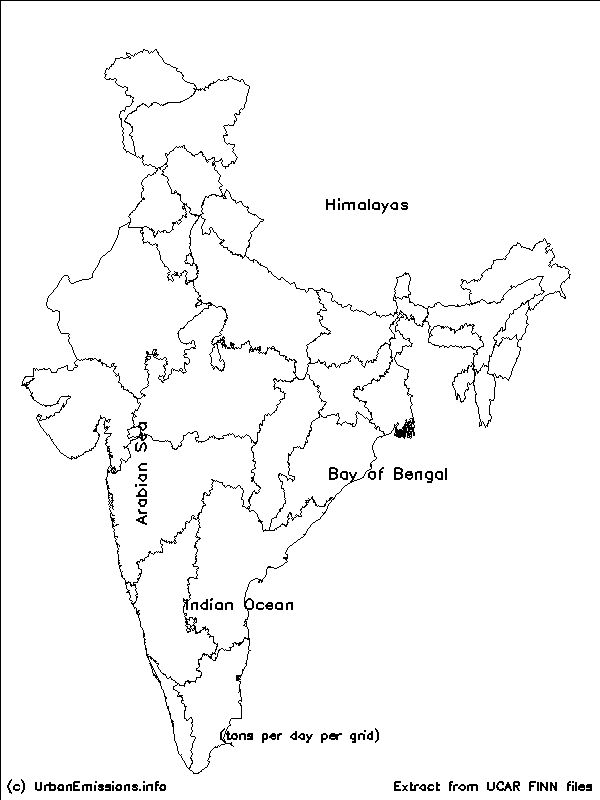
Open biomass burning makes up an important part of the total global emissions of greenhouse gases, reactive trace gases, and particulate matter. Although episodic in nature and highly variable, open biomass burning emissions can contribute to local, regional, and global air quality problems and climate forcings. The Fire INventory from NCAR (FINN) model provides high resolution, global emission estimates from open burning; these emissions have been developed specifically to provide input needed for modeling atmospheric chemistry and air quality in a consistent framework at scales from local to global. The inventory framework produces daily emission estimates at a horizontal resolution of ~1 km2. The product differs from other inventories because it provides a unique combination of high temporal and spatial resolution, global coverage, and estimates for a large number of chemical species. Read the full description of the product @ NCAR
Below is an extract of the daily emissions file covering the Indian Subcontinent. More details on how we are utilizing this product for air quality analysis and forecasting is @ http://www.indiaairquality.info
Air pollution is a growing problem in most cities (big and small). The "Daily Dose" aims to disseminate the best available information on air pollution and engage in discussions to better understand the process of air quality management. For more details visit https://www.urbanemissions.info
Sunday, October 16, 2016
Fire INventory from NCAR (FINN) - A Daily Open Fire Emissions Extracted for the Indian Subcontinent
CNG in India
In its efforts to move towards a gas-based economy, the NDA government plans to increase natural gas
contribution towards India’s energy mix to 15% from the current 6.5%. Read the full article @ VCC
Thursday, October 13, 2016
Night Time Temperatures are Dropping Over the Indo-Gangetic Plain
We know how bad the winter time air pollution can be in these parts, especially due to the need for space heating (indoors and outdoors), for which biomass and waste burning is equally responsible. Here is a snapshot of average night temperatures forecast on October 11th, 2016 - is this the start of the heating season?
Forecasts are updated every day @ 6 PM, Indian Standard Time @ http://www.indiaairquality.info
Winter Worsens Delhi's Pollution Levels
See the article @ Mail Today
See the article @ Financial Express
See the article @ India Live Today
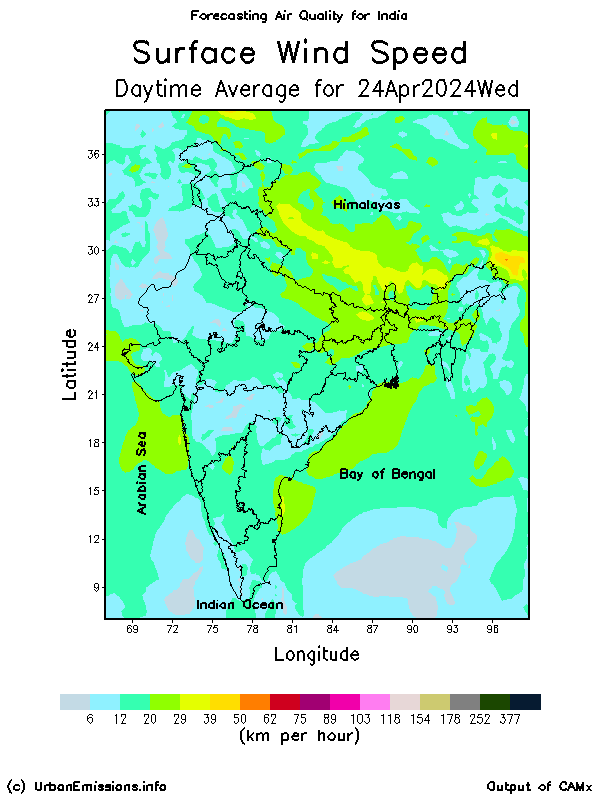
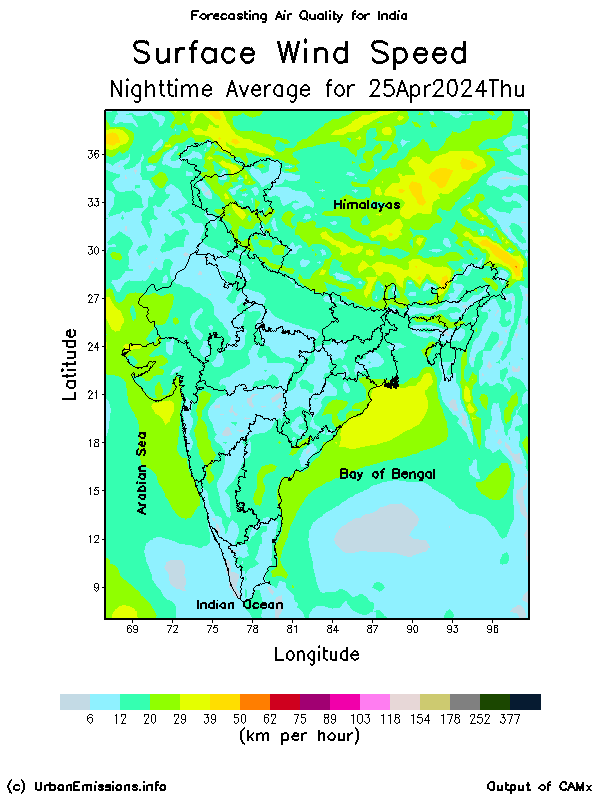
Wind are slowing down - see nighttime and daytime forecasts for the next three days.
Temperature are dropping, triggering the need for space heating - see nighttime and daytime forecasts for the next three days.
This is modeled source contributions to the ambient particulate pollution (PM2.5) in South Delhi district (one of the 14 districts in the National Capital Region (NCR) of Delhi). The calculations are conducted in forecast mode. More NCR district reports @ Delhi Air Quality.Info
- DUST.ERO = wind blown dust from the dry and arid regions, dependent of hourly meteorological conditions
- OPEN.FIRES = open biomass burning (both agricultural lands and forest areas), a seasonal affair linked to dry conditions and agricultural clearing patterns
- TRANS.PASS = contribution of passenger vehicles (2Ws, 3Ws, 4Ws, Taxis, and Buses)
- TRANS.FRGT = contribution of freight vehicles (heavy and light trucks, and non-road vehicles)
- RD.DUST = contribution of re-suspended dust on the roads due to vehicle movement and construction activities
- PP.DGS = contribution of power plants and in-situ diesel generator sets
- INDUS = contribution of industrial activities
- HOUS.HLD = contribution of domestic cooking, space heating, water heating, and lighting
- WST.BURN = contribution of open waste burning
- OTHERS = contribution of aviation, shipping, biogenics, etc..
Construction Sites Are Never Covered with Tarpaulin
Chandan Singh, from Hermu in Jharkhand, works at a construction site on Golf Course road. He handles cement with his bare hands and says he finds it hard to breath due to the dust. “All my life I have worked at construction sites. As these sites are spreading, it is sometimes difficult to sleep and people here cough for months,” he says. In the absence of measures to control pollution from construction sites, thousands of labourers like Chandan have to survive in hazardous conditions every day.
According to the Ministry of Environment & Forests (MoEF) guidelines, civic authorities should take measures to ensure toxins from construction machinery and vehicles, and construction dust are not released in the air. Similarly, the Haryana State Pollution Control Board (HSPCB) ordered that for construction activity beyond 2 lakh sqft, clearance has to be taken from the government on 70 environmental safety parameters notified by MoEF.
As per construction norms, sites should be covered with a tarpaulin sheet to prevent spread of dust. But on ground, these norms are nowhere to be seen. “Only by implementing norms can the pollution levels be reduced. Though several factors are responsible for air pollution, dust from construction sites in the region is a major contributor,” said Anumita Roychowdhury, executive director (research and advocacy), CSE.
Read the full article @ Hindustan Times
Early Smog in Delhi
Hold your breath and read the full article @ Mail Today
Labels:
Air Pollution in Delhi,
Mortality,
smog pollution
Wednesday, October 12, 2016
Open Fires in Northern India Creeping to Impact Air Quality
Check the calculated emissions from the FINN global inventory based on fire counts - a concentrated number of hot spots are now detectable over Punjab and Haryana and these emissions are dispersing far enough to detect their signature in Delhi. Below is our modeled source apportionment for South Delhi district from October 11th, 2016.
Modeled PM2.5 concentrations from October 11th, 2016 for the next three days (including all the emission sources). For more current updates from our forecasting program, please visit
Friday, October 07, 2016
Clean Air, but Ozone is Peaking in Beijing
Blue skies and white clouds are no longer a rare sight in my home city of Beijing. Public anger over China’s toxic smog has pushed the central and city governments to tackle high levels of deadly PM2.5 particulates that can contribute to heart and lung disease. A new report from Clean Air Asia shows the crackdown is working; it found an average drop of 14.1% in PM2.5 levels across 74 cities in 2015.
But blue skies do not necessarily equate to clean air. Ozone levels have risen significantly, especially in major cities, according to a report published in September by the Clean Air Alliance of China (CAAC). The 2016 China Air Quality Management Assessment shows ozone levels have bucked the general downward trend in pollution levels, and risen significantly in some cities.
Ozone levels in Beijing rose a staggering 26.6% in a year. In Jiangsu province, home to vast swathes of Shanghai’s industrial hinterland, they rose 8.4%. These problems areas are China’s most developed areas. Beijing has a higher level of car ownership than anywhere else in China. And Beijing’s average duration of congestion per day rose to three hours in 2015, up from one hour and fifty-five minutes in 2014. More gridlock means more exhaust emissions. In Jiangsu and Shanghai, air quality suffers from the combination of high levels of car ownership and large industrial sectors.
Read the full article @ China Dialogue
But blue skies do not necessarily equate to clean air. Ozone levels have risen significantly, especially in major cities, according to a report published in September by the Clean Air Alliance of China (CAAC). The 2016 China Air Quality Management Assessment shows ozone levels have bucked the general downward trend in pollution levels, and risen significantly in some cities.
Ozone levels in Beijing rose a staggering 26.6% in a year. In Jiangsu province, home to vast swathes of Shanghai’s industrial hinterland, they rose 8.4%. These problems areas are China’s most developed areas. Beijing has a higher level of car ownership than anywhere else in China. And Beijing’s average duration of congestion per day rose to three hours in 2015, up from one hour and fifty-five minutes in 2014. More gridlock means more exhaust emissions. In Jiangsu and Shanghai, air quality suffers from the combination of high levels of car ownership and large industrial sectors.
Read the full article @ China Dialogue
Thursday, October 06, 2016
Peaking Air Pollution Levels in Hanoi
Hanoi’s air pollution was recorded as the second worst in the world Wednesday morning by a global air quality watchdog. The Real-time Air Quality Index, which compiles information from local authorities globally, ranked the city as “very unhealthy” based on data provided by the U.S. Embassy’s monitoring station. Only India’s Varanasi ranked higher on the index. Hanoi’s air pollution is frequently blamed on traffic congestion. It is reported to be home to 5.5 million vehicles with 700 motorbikes for each kilometer/mile of road.
A recent study from the environment ministry put Hanoi’s nitrogen dioxide levels at 1.3 times permitted levels and particulate matters, which are defined as airborne particles of less than 10 micrometers in length, at 1.4 times the limit. High levels of smog in recent years have also made face masks a common site in the city, with carbon filter masks particularly popular. Duc Nguyen, a 20-year-old Vietnamese photographer living in Hanoi, told Anadolu Agency on Wednesday that air pollution is a big concern for him. “It was bad a couple of months before but its even worse now,” he said, adding that he blames the pollution on recurring health aliments. “I feel sleepy, breathless and my muscles are tired all the time.”
Read the full article @ World Bulletin
A recent study from the environment ministry put Hanoi’s nitrogen dioxide levels at 1.3 times permitted levels and particulate matters, which are defined as airborne particles of less than 10 micrometers in length, at 1.4 times the limit. High levels of smog in recent years have also made face masks a common site in the city, with carbon filter masks particularly popular. Duc Nguyen, a 20-year-old Vietnamese photographer living in Hanoi, told Anadolu Agency on Wednesday that air pollution is a big concern for him. “It was bad a couple of months before but its even worse now,” he said, adding that he blames the pollution on recurring health aliments. “I feel sleepy, breathless and my muscles are tired all the time.”
Read the full article @ World Bulletin
Effect of Air Pollution on Office Workers Performance
For anyone who has tried jogging through smog, the physically sapping impacts of air pollution should come as no surprise. But pollution doesn’t just slow down runners, it hampers workers too. Research by Tom Chang of the University of Southern California and colleagues found that pear packers working indoors were slowed by air pollution even at levels well below current air-quality standards. Might sedentary office workers indoors, also be slowed down by poor air quality?
In a second paper, Mr Chang and his colleagues studied China, where air pollution is a major problem. China releases a daily air-pollution index (API)—also referred to as an air-quality index—which rates air quality based on the health risk it represents. Anything above 100 is bad news. In Shanghai the index periodically hits 150, putting everyone’s health at risk. To establish the correlation between productivity and air pollution, the authors focus on office workers in two call centres in Shanghai and Nantong, where productivity can be measured by counting the number of calls workers handle per day.
What they find isn’t good. On days with higher air pollution, workers spend more time on breaks and complete fewer calls. On average, a 10% increase in the API was associated with a 0.35% decrease in number of calls handled per day. That quickly adds up: workers in the call centres studied are estimated to be 6% more productive on low-pollution days than on days when pollution is high. The likely culprit for office workers is particulate matter, which can easily enter buildings through windows and vents. The smallest of these particles enter the blood stream and the central nervous system, affecting concentration and mental performance.
Read the full article @ The Economist
In a second paper, Mr Chang and his colleagues studied China, where air pollution is a major problem. China releases a daily air-pollution index (API)—also referred to as an air-quality index—which rates air quality based on the health risk it represents. Anything above 100 is bad news. In Shanghai the index periodically hits 150, putting everyone’s health at risk. To establish the correlation between productivity and air pollution, the authors focus on office workers in two call centres in Shanghai and Nantong, where productivity can be measured by counting the number of calls workers handle per day.
What they find isn’t good. On days with higher air pollution, workers spend more time on breaks and complete fewer calls. On average, a 10% increase in the API was associated with a 0.35% decrease in number of calls handled per day. That quickly adds up: workers in the call centres studied are estimated to be 6% more productive on low-pollution days than on days when pollution is high. The likely culprit for office workers is particulate matter, which can easily enter buildings through windows and vents. The smallest of these particles enter the blood stream and the central nervous system, affecting concentration and mental performance.
Read the full article @ The Economist
Wednesday, October 05, 2016
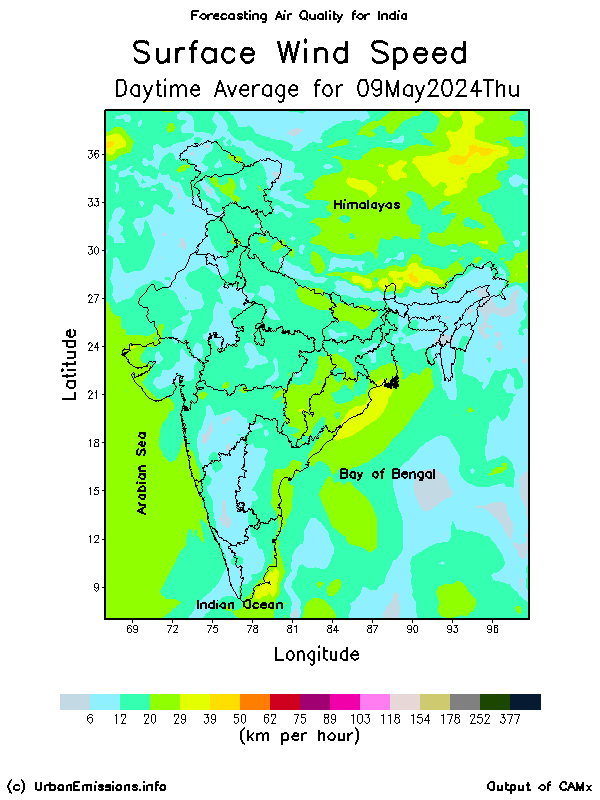
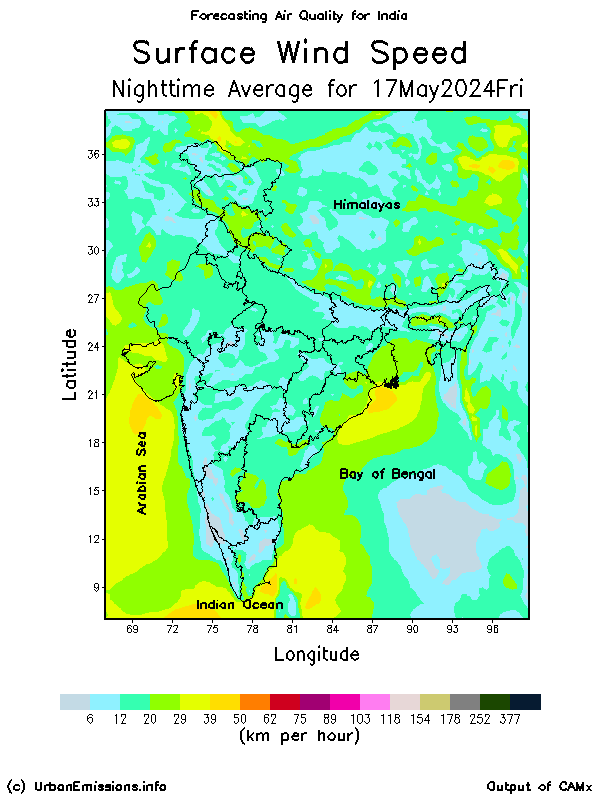
Average Daytime and Nighttime Wind Speeds Over the Indian Subcontinent (72hour Forecasts)
Details of the WRF forecasting system are @ http://www.indiaairquality.info updated 18:00 IST (everyday)
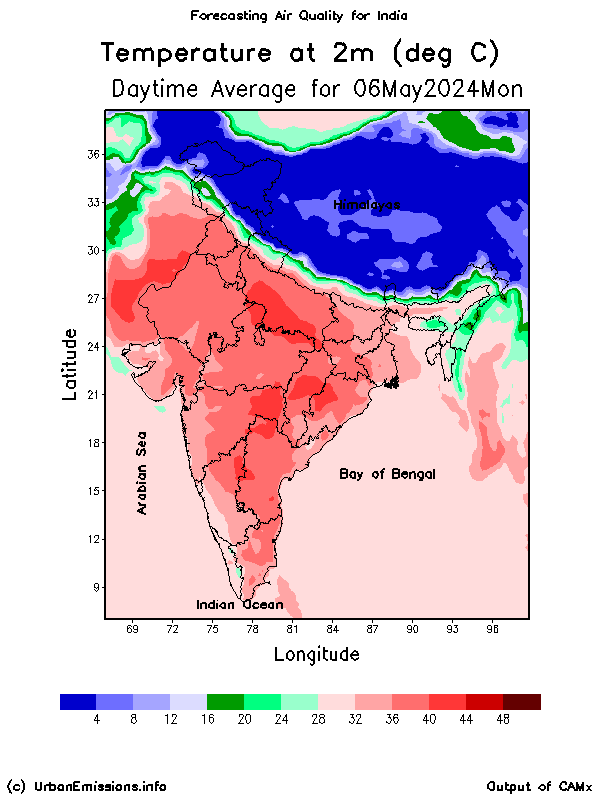
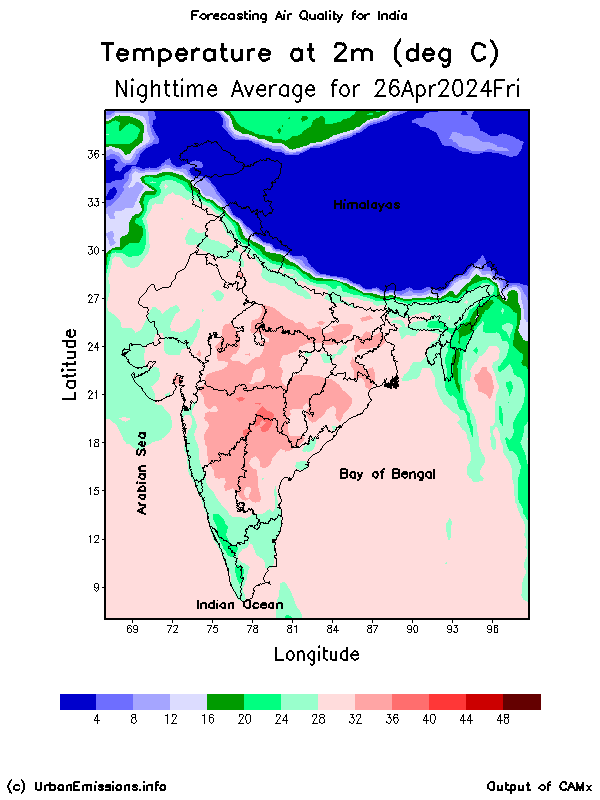
Average Daytime and Nighttime Temperatures Over the Indian Subcontinent (72hour Forecasts)
Details of the WRF forecasting system are @ http://www.indiaairquality.info updated at 18:00 IST (everyday)
Tuesday, October 04, 2016
How Poorer Countries Suffer More than the Rest
On Sunday, India ratified its accession to the Paris climate accords on the 147th anniversary of the birth of Mahatma Gandhi. President Obama congratulated India in a tweet, saying that "Gandhiji believed in a world worthy of our children. In joining the Paris Agreement, @narendramodi & the Indian people carry on that legacy," using a Hindi honorific for the man who championed Indian self-rule and stewardship of its land. The Paris agreement is the international community's biggest push yet to limit carbon emissions and other forms of pollution. Unfortunately, if worthiness is measured by being able to live in a world where the air one breathes does not spread disease and blacken one's lungs, then we are far from it.
A World Health Organization report last week said that 92 percent of people worldwide breathe unhealthy air and that about 3 million deaths a year — mostly from cardiovascular, pulmonary and other noncommunicable diseases — stemmed from high levels of air pollution. The number of people at risk rises to 98 percent in urban areas of low- and middle-income countries. Nearly 2 million of the deaths brought on early by pollution are in Southeast Asia and the Western Pacific region, according to the report, compared with 333,000 in Europe and the Americas. Read the full report @ Washington Post
Subscribe to:
Posts (Atom)