Showing posts with label Air Pollution in Shanghai. Show all posts

Thursday, October 06, 2016

Effect of Air Pollution on Office Workers Performance

For anyone who has tried jogging through smog, the physically sapping impacts of air pollution should come as no surprise. But pollution doesn’t just slow down runners, it hampers workers too. Research by Tom Chang of the University of Southern California and colleagues found that pear packers working indoors were slowed by air pollution even at levels well below current air-quality standards. Might sedentary office workers indoors, also be slowed down by poor air quality?

In a second paper, Mr Chang and his colleagues studied China, where air pollution is a major problem. China releases a daily air-pollution index (API)—also referred to as an air-quality index—which rates air quality based on the health risk it represents. Anything above 100 is bad news. In Shanghai the index periodically hits 150, putting everyone’s health at risk. To establish the correlation between productivity and air pollution, the authors focus on office workers in two call centres in Shanghai and Nantong, where productivity can be measured by counting the number of calls workers handle per day.

What they find isn’t good. On days with higher air pollution, workers spend more time on breaks and complete fewer calls. On average, a 10% increase in the API was associated with a 0.35% decrease in number of calls handled per day. That quickly adds up: workers in the call centres studied are estimated to be 6% more productive on low-pollution days than on days when pollution is high. The likely culprit for office workers is particulate matter, which can easily enter buildings through windows and vents. The smallest of these particles enter the blood stream and the central nervous system, affecting concentration and mental performance.

Read the full article @ The Economist

Saturday, June 18, 2016

Shanghai to Close 255 Industrial Facilities for G20 Summit and Clear Skies

China ordered at least 255 Shanghai-based industrial facilities, including part of a major oil refinery operated by Sinopec Corp, to shut for 14 days to reduce pollution ahead of the G20 summit, according to an official document reviewed by Reuters.

The document, issued by the Shanghai Environment Protection Bureau, has ordered a wide range of companies from power and petrochemical plants to logistics firms to shut down between Aug. 24 and Sept. 6 for the upcoming G20 meet in Hangzhou. Authorities in neighboring Zhejiang and Jiangsu province are set to issue similar orders to limit air pollution and safety hazards within a 300 km radius from Hangzhou, according to industry and government officials.

Shanghai Petrochemical Corp, a subsidiary refinery of state refiner Sinopec Corp, will reduce its capacity by 50 percent, or about 120,000 barrels per day (bpd), for the G20 event during those two weeks, the document from the environment bureau said. Coal-fired power plants in the area that do not meet emissions standards will be fully closed over the two weeks, it also said, and the usage of heavy machinery will be reduced by 30 percent across Shanghai.

The G20 summit, hosted in the first week of September, has become China's biggest diplomatic event of the year and is expected to gather together world leaders like Chinese President Xi Jinping and U.S. President Barack Obama.

Read the full article @ the Reuters

Friday, February 06, 2015

Shanghai to Spend US$16 billion on Anti-Pollution Campaign

SHANGHAI will spend 100 billion yuan (US$16.13 billion) in the next three years on more than 200 projects in an effort to rid the city of pollution, authorities said yesterday. The funds will be spent on 220 projects in eight areas of concern, namely, water, air, soil, waste, industry, agriculture, ecology and circular economy, said Zhang Quan, director of the Shanghai Environmental Protection Bureau. The major concerns are serious nitrogen and phosphorus pollution in water, high level of PM2.5 pollutant particles in the air, chemical and oil fumes from restaurants, Zhang said.

Article @ Shanghai Daily

The aim is to significantly cut the number of heavy pollution days and reduce the PM2.5 density to 48 micrograms per cubic meter by the end of 2017. The World Health Organization says a “safe” PM2.5 concentration is 25. The city’s overall air quality improved last year from 2013 thanks to the absence of extreme weather and putting in place anti-air pollution measures like the use of cleaner energy sources. The average PM2.5 density was 52 last year, down 16.1 percent from 2013.
Also on the agenda are 17 sewage treatment plans. The Bailonggang factory will be renovated, and three sewage treatment factories will be constructed in areas such as Nanxiang and Hongqiao.

By 2017, all big and medium restaurants will be installed with highly efficient oil smoke purifying facilities, and about 300,000 heavily polluting vehicles will be eliminated from the street. A total of 171,600 heavily polluting vehicles were eliminated from the city roads last year. This year, more than 90,000 polluting vehicles will be eliminated while 1,100 boilers at small and medium plants will be replaced. Over the past three years, the discharge of four major pollutants — chemical oxygen, ammonia nitrogen (NH3-N), sulfur dioxide and nitrogen oxide had also dropped substantially, Zhang said. Enterprises were fined more than 100 million yuan last year for breaking the city’s air pollution regulations. Some 3,180 hectares of green space have been added in the past three years with the total forest coverage touching 14 percent at the end of last year. About 2.8 million households had been included in the garbage sorting plan.

Its per capita garbage treatment volume of household garbage was 0.66 kilograms daily last year, compared with 0.82 kilograms per day in 2010, according to the Shanghai Greenery and Public Sanitation Bureau. But the awareness of garbage sorting among the public was still weak.

Monday, February 02, 2015

Average Work Travel Burden in Beijing = 52 minutes per day


More than three million people from more than 300 cities took part in the project launched by Baidu, the country's largest internet search company, the CNS report said. The method was simple. Commuting smartphone users marked the location of their home and workplace in Baidu's map service app, and the commuting distance and time was automatically calculated and uploaded to a cloud server. Read more @ SCMP

Wednesday, January 14, 2015

Air Pollution in Shanghai - Local vs. Non-Local

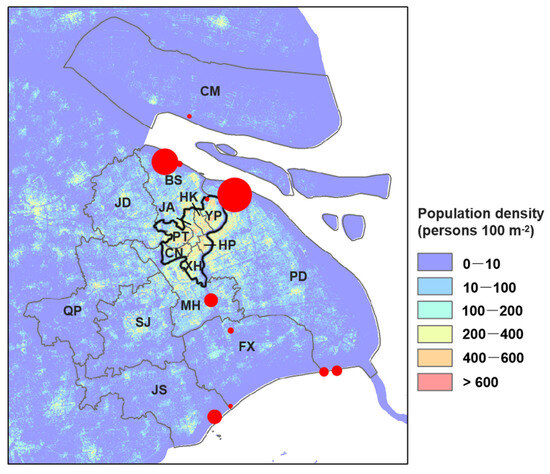
More than a quarter of the PM 2.5 pollutants in Shanghai in 2012 and 2013 originated from outside the city, new research shows. The Shanghai Environmental Protection Bureau released its most comprehensive study on the sources of PM 2.5 last Wednesday, revealing that PM 2.5 or fine particulate matter is the main air pollutant in the city. Based on weather data collected in 2012 and 2013, researchers at the air quality watchdog revealed that 74 percent of PM 2.5 came from local pollutants and the remaining 26 percent came from neighboring areas.

Most of the fine particles in the city air came from transport exhausts - cars, buses, trucks, ships, aircraft and off-road motors (like construction equipment or locomotives) and accounted for 29.2 percent of the pollution. The other major sources involved industrial waste (28.9 percent), coal burning (13.5 percent), dust (13.4 percent) and agricultural waste, straw and other biomass burning as well as domestic pollutants (15 percent).

Vehicle exhausts produce the most pollutants, accounting for more than 9.7 percent of the fine particles measured in the city, much more than in some of the cities in the Beijing-Tianjin-Hebei region. But the researchers found that Shanghai was less affected by coal burning than northern cities, where people rely on it for heating in winter. Researchers also found that Shanghai was less affected by dust than northern cities, because of the moist air and the city government's work in combating dust.

Read more @ Global Times

Sunday, December 22, 2013

US$ 300 Billion Investment to Clean Up Air Pollution in Chinese Cities


A total of 1.75 trillion yuan (290 billion U.S. dollars) will be invested from 2013 to 2017 to deal with China's worsening air pollution, an environment expert said on Wednesday.

Link to the article from China Daily.

Wang Jinnan, deputy head of the Chinese Academy for Environmental Planning, said at the 4th Caixin Summit in Beijing that the investment would drive up GDP by nearly 2 trillion yuan and create over 2 million jobs.

Real-time air quality and air quality index in Shanghai

According to Wang, 36.7 percent of the investment, or 640 billion yuan should go on cleaning up industry, followed by 490 billion yuan (28.2 percent) on cleaner energy sources. Cleaning up motor vehicles will absorb 210 billion yuan.

Real-time air quality and air quality index in Beijing

The State Council issued the Air Pollution Prevention and Control Action Plan in September to control PM2.5 (airborne particles of less than 2.5 microns diameter).

Real-time air quality and air quality index in Guangzhou

The action plan requires PM2.5 in populated regions and metropolises to be reduced significantly by 2017. The annual average of PM2.5 in Beijing would be expected to drop to 60 micrograms per cubic meter.

Link to the article in the Guardian.

***********

From Global Times

Over 1 trillion yuan ($163.4 billion) will be allocated to the fight against air pollution in Beijing amid a newly-issued five-year action plan, dubbed the strongest since 1988, an official in the Beijing Municipal Bureau of Environmental Protection said Monday.

Real-time air quality and air quality index in Chengdu

However, only 200 to 300 billion will come from the government.

The rest of the money will be taken from enterprises and other organizations, Wang Xiaoming, director of the publicity department of the bureau, told the Global Times, adding that the contributing enterprises would be those responsible for air pollution.

Real-time air quality and air quality index in Kunming

Over the next five years, the plan calls for the cutting of the concentration of PM2.5 particles (airborne particles measuring less than 2.5 microns in diameter) to a level of around 60 micrograms per cubic meter. This would represent a decline of about 25 percent compared with the 2012 level, according to the Airborne Pollution Prevention and Control Action Plan (2013-17) released on September 12.

Of all the plans, this represents the most comprehensive since 1988, when the city started to tackle air pollution, Fang Li, deputy head of the bureau, said at a press conference Monday, The Beijing News reported.


Real-time air quality and air quality index in Tianjin

 "One trillion yuan is a large investment into combating air pollution," said Ma Jun, director with the Institute of Public and Environmental Affairs, adding that transparency would need to be a key component of the plan.

The action plan includes eight pollution reduction projects with 84 specific tasks, divided among 42 bureaus and 23 enterprises in 14 districts and two counties of the city, and outlines the specific people responsible and the timetable, the China Economic Weekly said in a report on Monday.

The plan also calls for the city to cut coal consumption by 13 million tons.

Real-time air quality and air quality index in Chifeng

Although 13 million tons is not a small amount, this will not have a significant influence on the city  due to the large coal consumption of  industrial bases in the surrounding areas, Wang Tao, a resident scholar at the Carnegie-Tsinghua Centre for Global Policy, told the Global Times Tuesday.

The measures to reduce coal consumption should be carried out on a regional basis in coordination with surrounding areas like Hebei, Shanxi and Shandong provinces, and without efforts by these areas, the city alone cannot tackle the pollution from burning coal, Wang said.

Real-time air quality and air quality index in Baoding

Wednesday, December 11, 2013

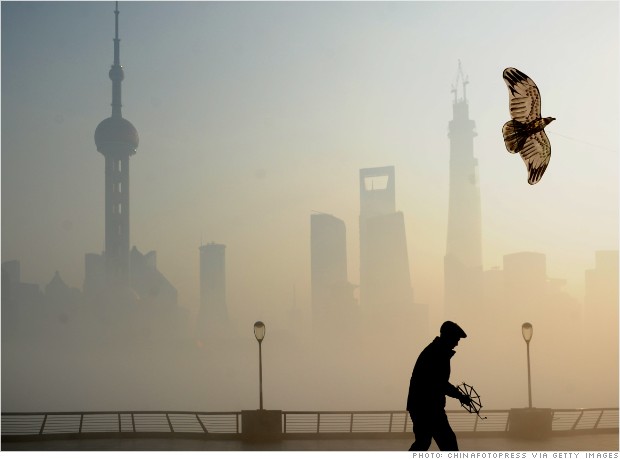
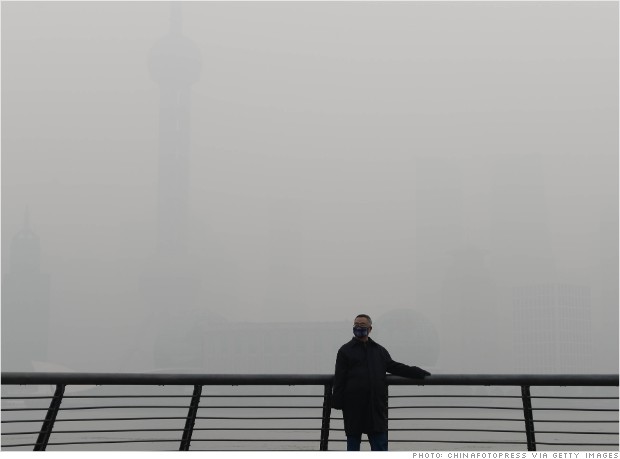
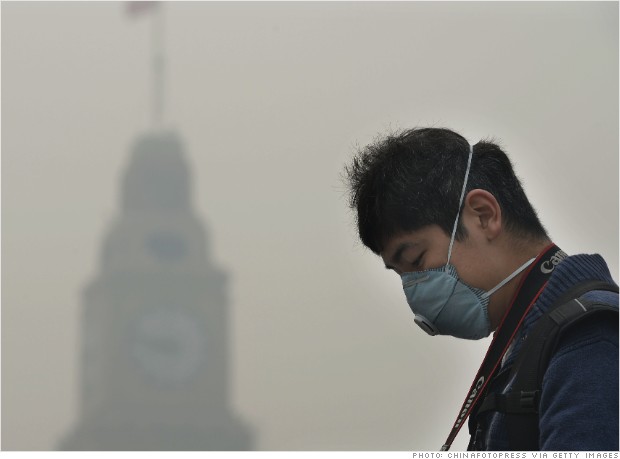
Shanghai - A City Lost in Smog (December, 2013)

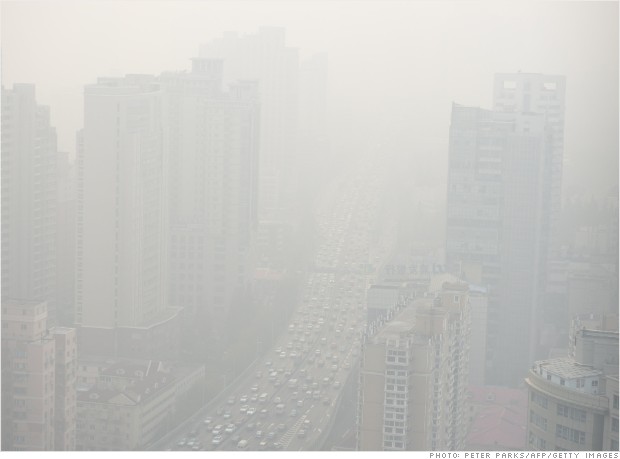
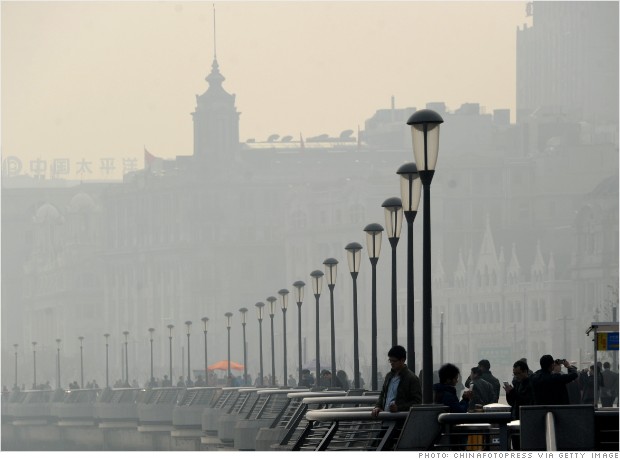
Thick smog swallows the city’s tallest buildings. The visibility and air quality is so bad that the city has notched record pollutions levels.

The AirNOW-International program piloted one project in Shanghai to run the state-of-the-art state-of-the-art air quality notification and forecasting system as a collaborative project between the U.S. EPA and the Shanghai Environmental Protection Bureau (SEPB) and its Monitoring Center (SEMC).

Real-time air quality and air quality index in Shanghai

 
Visit NBCNews.com for breaking news, world news, and news about the economy


Shanghai Environmental Monitoring Center

Air Quality Monitoring Station - US Consulate, Shanghai

(link to the Photo Journal on CNN Money)

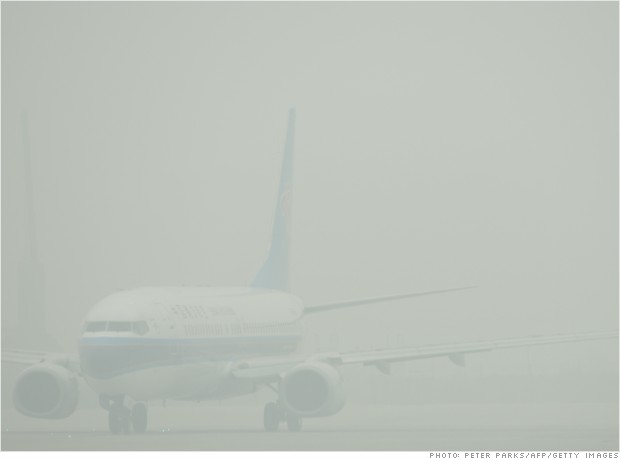
Home to more than 20 million people, the city of Shanghai has been blanketed by a thick layer of smog for days. Reduced visibility has resulted in hundreds of canceled flights, and health worries have prompted schools to close. A change in weather patterns is causing conditions to improve, but air in the city is still classified as unhealthy for sensitive groups. 


At its worst, the city's air quality index topped 500. The U.S. categorizes any reading over 300 as "hazardous." It is notoriously difficult to get accurate pollution readings in China. When severe smog hits Beijing, residents rely on the U.S. Embassy's own readings published via social media.

China's leaders face growing pressure to clean up the air as record pollution levels choke the nation. It's not just the air -- anger has swelled in the world's most populous country over contaminated food and water. Environmental standards were once low on Beijing's priority list, and often overshadowed by efforts to boost economic growth. Now there are signs the government is shifting its focus as more and more Chinese insist on a healthier environment. An ambitious blueprint for economic and social reform unveiled last month, for example, included measures to tackle pollution.

China's central government announced a fresh round of environmental targets in September. The new blueprint sets a nationwide goal to cut the concentration of harmful particles in the air by at least 10% over the next four years, compared to 2012 levels. The targets are even more ambitious in heavily polluted regions. In northern China -- including Beijing, Tianjin and Hebei -- the goal is to cut the level of particles by 25%, while in Shanghai and the Yangtze River Delta the target is 20%.

A recent study found that severe pollution has slashed an average of five and half years from life expectancy in northern China. The researchers made this determination by comparing the health of northern Chinese to citizens living south of the Huai River. For decades, free winter heating was provided to areas north of the river, while no such luxury was extended in the south due to budgetary restraints. The free heating was powered by coal boilers, which resulted in significantly higher levels of pollution.


Until this wave of pollution hit, there was a perception that Shanghai was better equipped to handle dirty air than Beijing. The ramifications could be major -- and even effect the development of the Shanghai Free Trade Zone, an experimental commerce area that is seeking to attract foreign firms.


Saturday, November 23, 2013

Environmental Immigrants - Urbanites Flee China’s Smog for Blue Skies (NYT)

A typical morning for Lin Liya, a native of Shanghai transplanted to this ancient town in southwest China, goes like this: See her 3-year-old son off to school near the mountains; go for a half-hour run on the shores of Erhai Lake; and browse the local market for fresh vegetables and meat.

Link to the article on New York Times.


She finished her run one morning beneath cloudless blue skies and sat down with a visitor from Beijing in the lakeside boutique hotel started by her and her husband.

Air Pollution in Beijing - By Numbers


“I think luxury is sunshine, good air and good water,” she said. “But in the big city, you can’t get those things.”

1 Million Lung Cancer Patients in China by 2025


More than two years ago, Ms. Lin, 34, and her husband gave up comfortable careers in the booming southern city of Guangzhou — she at a Norwegian risk management company, he at an advertising firm that he had founded — to join the growing number of urbanites who have decamped to rural China. One resident here calls them “environmental refugees” or “environmental immigrants.”

At a time when hundreds of millions of Chinese, many poor farmers, are leaving their country homesteads to find work and tap into the energy of China’s dynamic cities, a small number of urban dwellers have decided to make a reverse migration. Their change in lifestyle speaks volumes about anxieties over pollution, traffic, living costs, property values and the general stress found in China’s biggest coastal metropolises.

Air Quality in Beijing


Take air quality: Levels of fine particulate matter in some Chinese cities reach 40 times the recommended exposure limit set by the World Health Organization. This month, an official Chinese news report said an 8-year-old girl near Shanghai was hospitalized with lung cancer, the youngest such victim in China. Her doctor blamed air pollution.

China Needs Olympic Period Regulations or Similar to Cut Pollution Problems


The urban refugees come from all walks of life — businesspeople and artists, teachers and chefs — though there is no reliable estimate of their numbers. They have staked out greener lives in small enclaves, from central Anhui Province to remote Tibet. Many are Chinese bobos, or bourgeois bohemians, and they say that besides escaping pollution and filth, they want to be unshackled from the material drives of the cities — what Ms. Lin derided as a focus on “what you’re wearing, where you’re eating, comparing yourself with others.”

The town of Dali in Yunnan Province, nestled between a wall of 13,000-foot mountains and one of China’s largest freshwater lakes, is a popular destination. Increasingly, the indigenous ethnic Bai people of the area are leasing their village homes to ethnic Han, the dominant group in China, who turn up with suitcases and backpacks. They come with one-way tickets from places like Beijing, Shanghai, Guangzhou and Shenzhen, all of which have roaring economies but also populations of 15 million people or more.

On Internet forums, the new arrivals to Dali discuss how to rent a house, where to shop, how to make a living and what schools are best for their children. Their presence is everywhere in the cobblestone streets of the old town. They run cafes, hotels and bookstores, and the younger ones sit on the streets selling trinkets from blankets.

Some become farmers here, and some spend their days home schooling their children. Their presence has transformed Dali and surrounding villages into a cross between Provence and Haight-Ashbury.
One magnet is the village of Shuanglang, which became a draw after the famous Yunnan natives Yang Liping, a dancer, and Zhao Qing, an artist, built homes there. As at other lakeside villages, the immigrants, some with immense wealth, live near fishermen and farmers.

“All kinds of people come here with different dreams,” said Ye Yongqing, 55, an ethnic Bai artist from the region who has lived mostly in cities, including London, but bought a home here five years ago. “Some people imagine this place as Greece or Italy or Bali.”

“Dali is one of the few places in China that still has a close tie to the earth,” he added, sitting in front of a table of squashes in his garden courtyard. “A lot of villages in China have become empty shells. Dali is a survivor of this phenomenon.”

Ms. Lin said she first fell in love with Dali when she came as a backpacker in 2006. She returned twice before moving here. In 2010, on the third visit, she and her husband, whom she had met trekking in Yunnan, looked for land to lease to build a hotel on Erhai Lake. It has not all been easy going, Ms. Lin said, citing negotiations and misunderstandings with local officials, villagers and employees.

“We just wanted to switch to a different life,” said Ms. Lin, who had lived in Shanghai as well as Guangzhou. “My friends in Shanghai are struggling there — not only in their work, but also just to live. The prices are too high, even higher than in Europe. They become crazy, go mad.”

Ms. Lin moved here less than two years after giving birth to a son. “It’s good for the baby because it’s like my mother’s childhood,” she said. “My mother’s childhood in Shanghai — the air was still clean, you could see blue skies, there was clean water.”

That is a common refrain among parents here. One afternoon, four mothers, all urban refugees, sat outside a bookstore cafe, Song’s Nest, practicing English with one another. “The one thing we all have in common is we moved here to raise our children in a good environment,” one woman said.

The bookshop’s owner, Song Yan, moved here this year and translates books by an Indian philosopher popular with Chinese spiritual seekers. One night, she and another translator and urban refugee, Zheng Yuantao, 33, talked over dinner about their moves.

“I’ve never felt so free in my life,” Mr. Zheng said. “I grew up as a city boy, and I never realized how much I like living close to nature.”

From the nearby lakeside village of Caicun, Huang Xiaoling, a photographer, flies back to Beijing to shoot portraits and events for clients. She had once lived in a courtyard home in the Chinese capital, but fled in September with her 3-year-old son and husband, an American who works remotely as a technology director for a New York publishing company.

“I’m still productive even though I don’t go into an office,” she said. “I don’t know if it’s the weather and the environment, or just me feeling that, ‘Oh, I got out of the cave that I wanted to escape.’ ”