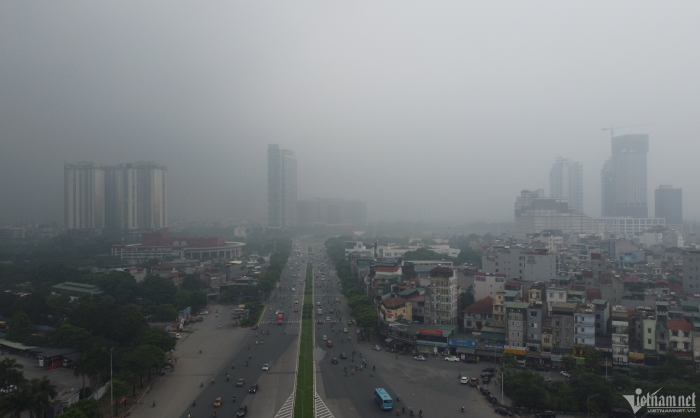
Direct Article Link or click on the image below.
Air pollution is a growing problem in most cities (big and small). The "Daily Dose" aims to disseminate the best available information on air pollution and engage in discussions to better understand the process of air quality management. For more details visit https://www.urbanemissions.info
Showing posts with label Air Pollution in Hanoi. Show all posts
Saturday, October 11, 2025
Sunday, September 14, 2025
Op-Ed - Foreigners flee Hanoi’s choking air pollution
Direct Article Link or click on the image below.
Friday, July 18, 2025
Op-Ed - Hanoi air pollution triggers national clean air campaign
Direct Article Link or click on the image below.
Wednesday, July 16, 2025
Op-Ed - How petrol motorbikes drive Hanoi's air pollution
Direct Article Link or click on the image below.
Saturday, February 18, 2023
Journal Article - Chemical composition and potential sources of PM2.5 in Hanoi
Thursday, October 06, 2016
Peaking Air Pollution Levels in Hanoi
Hanoi’s air pollution was recorded as the second worst in the world Wednesday morning by a global air quality watchdog. The Real-time Air Quality Index, which compiles information from local authorities globally, ranked the city as “very unhealthy” based on data provided by the U.S. Embassy’s monitoring station. Only India’s Varanasi ranked higher on the index. Hanoi’s air pollution is frequently blamed on traffic congestion. It is reported to be home to 5.5 million vehicles with 700 motorbikes for each kilometer/mile of road.
A recent study from the environment ministry put Hanoi’s nitrogen dioxide levels at 1.3 times permitted levels and particulate matters, which are defined as airborne particles of less than 10 micrometers in length, at 1.4 times the limit. High levels of smog in recent years have also made face masks a common site in the city, with carbon filter masks particularly popular. Duc Nguyen, a 20-year-old Vietnamese photographer living in Hanoi, told Anadolu Agency on Wednesday that air pollution is a big concern for him. “It was bad a couple of months before but its even worse now,” he said, adding that he blames the pollution on recurring health aliments. “I feel sleepy, breathless and my muscles are tired all the time.”
Read the full article @ World Bulletin
A recent study from the environment ministry put Hanoi’s nitrogen dioxide levels at 1.3 times permitted levels and particulate matters, which are defined as airborne particles of less than 10 micrometers in length, at 1.4 times the limit. High levels of smog in recent years have also made face masks a common site in the city, with carbon filter masks particularly popular. Duc Nguyen, a 20-year-old Vietnamese photographer living in Hanoi, told Anadolu Agency on Wednesday that air pollution is a big concern for him. “It was bad a couple of months before but its even worse now,” he said, adding that he blames the pollution on recurring health aliments. “I feel sleepy, breathless and my muscles are tired all the time.”
Read the full article @ World Bulletin
Friday, July 22, 2016
For Public Transportation, Hanoi Wants to Ban Bikes by 2025
Vietnam’s government plans to rid the congested streets in downtown Hanoi of motorbikes by 2025 to make room for more buses and metro lines — but residents areless than open to the change.
There are currently around half a million cars and 5 million motorbikes on the Hanoi streets, and the government estimates that economic growth will increase those numbers to 1 million cars and 7 million motorbikes by 2020. The streets are already crowded, and air pollution is bad enough that the Real Time Air Quality Index classifies the city as “unhealthy.”
“The traffic situation in Hanoi will become extremely complicated in the next four to five years,” Hanoi City Chairman Nguyen Duc Chung said at a public development meeting. “So we really need a timely solution to this.”
That solution includes building highway, bridges, tunnels, bus stations, along with doubling the number of buses and adding six new metro train lines by 2030. But it also includes banning motorbikes from the city center within ten years. In a city where less than 10 percent of residents use public transportation, the transition would be extreme.
In addition to not wanting to part with an integral mode of transportation, The Guardian reports that some see the move as unfair to those who cannot afford their own cars. Many are skeptical that the construction of the first two new metro lines will happen on schedule by 2020, since they have already faced delays.
There are currently around half a million cars and 5 million motorbikes on the Hanoi streets, and the government estimates that economic growth will increase those numbers to 1 million cars and 7 million motorbikes by 2020. The streets are already crowded, and air pollution is bad enough that the Real Time Air Quality Index classifies the city as “unhealthy.”
“The traffic situation in Hanoi will become extremely complicated in the next four to five years,” Hanoi City Chairman Nguyen Duc Chung said at a public development meeting. “So we really need a timely solution to this.”
That solution includes building highway, bridges, tunnels, bus stations, along with doubling the number of buses and adding six new metro train lines by 2030. But it also includes banning motorbikes from the city center within ten years. In a city where less than 10 percent of residents use public transportation, the transition would be extreme.
In addition to not wanting to part with an integral mode of transportation, The Guardian reports that some see the move as unfair to those who cannot afford their own cars. Many are skeptical that the construction of the first two new metro lines will happen on schedule by 2020, since they have already faced delays.
Wednesday, July 20, 2016
Fighting Motorcycles and Waiting for Metro Lines in Hanoi
Hanoi, a city with more motorbikes than households, has to contend with heavy congestion and frequent traffic accidents. In recent years, studies have named it among the worst cities in Asia for air pollution. In May this year, Vietnamese media reported that the US embassy’s air quality monitor in Hanoi registered a “hazardous” spike in particulate matter, reportedly reaching a level seven times that recommended by the World Health Organisation.
Though the government hopes the metro can tackle both traffic and environmental issues at once, the project has faced numerous delays and setbacks. What’s more, convincing Hanoians to give up their motorbikes could turn out to be the biggest challenge yet.
In 2008, more than 80% of journeys in the city were carried out by motorbikes and scooters – and a fast-growing share of the population is opting for cars. Currently there are roughly 4.9 million motorbikes and scooters on Hanoi’s roads. The use of bicycles, once the dominant transport mode in the city, decreased dramatically as motorbikes and cars became more popular: in 1995, 47% of journeys were made by bicycle; in 2008, the figure had dropped to only 3%.
Hanoi’s Transport Plan aims to increase the share of public transport from the current low figure of 9% of trips, to above 60% by 2030, by which time Hanoi is slated to have six new metro lines and three Bus Rapid Transit (BRT) lines. But the ambitions get even steeper. Last month, Hanoi’s Party Committee outlined plans to ban motorbikes from the downtown area by 2025, in line with improved public transport. A total downtown ban of the vehicles would require a huge lifestyle shift for most residents – and put an enormous amount of pressure on the new metro system. None of the locals I speak to regard the 2025 plan as feasible.
Though the government hopes the metro can tackle both traffic and environmental issues at once, the project has faced numerous delays and setbacks. What’s more, convincing Hanoians to give up their motorbikes could turn out to be the biggest challenge yet.
In 2008, more than 80% of journeys in the city were carried out by motorbikes and scooters – and a fast-growing share of the population is opting for cars. Currently there are roughly 4.9 million motorbikes and scooters on Hanoi’s roads. The use of bicycles, once the dominant transport mode in the city, decreased dramatically as motorbikes and cars became more popular: in 1995, 47% of journeys were made by bicycle; in 2008, the figure had dropped to only 3%.
Hanoi’s Transport Plan aims to increase the share of public transport from the current low figure of 9% of trips, to above 60% by 2030, by which time Hanoi is slated to have six new metro lines and three Bus Rapid Transit (BRT) lines. But the ambitions get even steeper. Last month, Hanoi’s Party Committee outlined plans to ban motorbikes from the downtown area by 2025, in line with improved public transport. A total downtown ban of the vehicles would require a huge lifestyle shift for most residents – and put an enormous amount of pressure on the new metro system. None of the locals I speak to regard the 2025 plan as feasible.
Friday, June 03, 2016
Vietnam Approves Air Quality Management Plan for 2020
The National Action Plan on Air Quality Control by 2020, which aims to strictly monitor sources of exhaust fumes, especially industrial fumes, has been approved Prime Minister Nguyen Xuan Phuc. The four-year plan also targets to identify the levels of dust pollution in urban areas and then determine the solution.
Under the plan, 80 per cent of steel, chemical and fertiliser producers across the country will run national-standard systems to treat dust and exhaust fumes, including sulfur dioxide (SO2), mono-nitrogen oxides (NOx) and carbon monoxide (CO), and 90 per cent of thermal power plants nationwide will install emission observation systems in the next four years.
Prime Minister Nguyen Xuan Phuc gave the green light to the plan three months after Hanoi’s air pollution was reported to be at hazardous levels in March, according to the Air Quality Index’s statistics, threatening the health of those with respiratory diseases and endangering public health in general.
At that time, Hoang Duong Tung, deputy head of the Vietnam Environment Administration said “Air pollution in Hanoi is a very worrying situation currently.” To achieve the plan’s goals, authorised agencies have been told to quickly perfect policies related to air quality control, strengthen international co-operation, mobilise financial support and raise public awareness of air pollution, the plan said.
More @ VietnamNet
Prime Minister Nguyen Xuan Phuc gave the green light to the plan three months after Hanoi’s air pollution was reported to be at hazardous levels in March, according to the Air Quality Index’s statistics, threatening the health of those with respiratory diseases and endangering public health in general.
At that time, Hoang Duong Tung, deputy head of the Vietnam Environment Administration said “Air pollution in Hanoi is a very worrying situation currently.” To achieve the plan’s goals, authorised agencies have been told to quickly perfect policies related to air quality control, strengthen international co-operation, mobilise financial support and raise public awareness of air pollution, the plan said.
More @ VietnamNet
Saturday, February 21, 2015
US Embassies Monitoring Air Quality in Multiple Countries
In 2008, American diplomats in Beijing quietly installed an
electronic monitor outside the U.S. Embassy to test pollution levels in
the Chinese capital’s famously sooty air. The results, posted daily on
the Internet, were mainly intended for U.S citizens and visitors, but
soon ordinary Chinese were logging in for reliable information about
health threats in the air they breathed. Chinese officials complained, but the daily reports from the embassy’s monitor added
to the pressure that eventually led China to take dramatic steps to
reduce smog. It worked so well, in fact, that the Obama administration
has now decided on a major expansion — to U.S. diplomatic missions all
around the world.
In a joint announcement on Wednesday, Secretary of State John F. Kerry and EPA Administrator Gina McCarthy unveiled plans to place air-quality monitors outside embassies in numerous foreign cities, starting with diplomatic posts in India and then moving to Vietnam, Mongolia and other countries.
Read more @ Washington Post
In a joint announcement on Wednesday, Secretary of State John F. Kerry and EPA Administrator Gina McCarthy unveiled plans to place air-quality monitors outside embassies in numerous foreign cities, starting with diplomatic posts in India and then moving to Vietnam, Mongolia and other countries.
Read more @ Washington Post
Sunday, June 24, 2012
Air Pollution News & Alerts - June 24th, 2012
India Together, June, 2012
Environmental Records in India.
The Telegraph, June 21st, 2012
Rio+20: Nick Clegg blames China for 'disappointing text'.
Environment News Service, June 21st, 2012
Rio+20: Billions Committed for Sustainable Energy, Transport.
EDF, June 21st, 2012
Proposed Soot Standards Long Overdue.
Phys.Org, June 21st, 2012
UN aims at universal access to clean energy by 2030.
People's World, June 21st, 2012
Senate blocks GOP attack on clean air regulations.
The Hindu Business Line, June 21st, 2012
Climate change, courtesy coal.
New York Times, May 20th, 2012
Cooking Up a Cleaner, Safer Open-Fire Stove.
PTleader, June 20th, 2012
Up in smoke: Woodstoves are air pollution offenders.
New York Times, June 20th, 2012
Businesses Take Action to Clean Up London’s Air.
China Dialogue, June 20th, 2012
20 years of China’s public voice.
NPR, June 19th, 2012
Rio Environment Meeting Focuses On 'Energy For All.
NRDC Switchboard, June 19th, 2012
The Price of Pollution Politics.
Mongolia News, June 18th, 2012
MPs initiates a Special Tax law on coal export.
Mongolia News, June 18th, 2012
Mongolian Engineers Invent Duobuses of New Model.
DoE Pulse, June 18th, 2012
Berkeley Lab scientists tackle air pollution in Mongolia.
Talk Vietnam, June 16th, 2012
Pollution in Hanoi.
Pollution in Hanoi.
Times of India, June 16th, 2012
Garbage Fire Turns Perungudi into a gas chamber.
Bangkok Post, June 16th, 2012
Regulate this silent killer in Bangkok.
Norden, June 16th, 2012
Nordic Workshop on action related to Short Lived Climate Forcers.
Norden, June 16th, 2012
Svalbard Declaration on Shortlived Climate Forcers.
Info Mongolia, June 15th, 2012
Reducing Air Pollution in Ulaanbaatar.
Huffington Post, June 15th, 2012
New Soot Pollution Standard Benefits Americans, Saves Lives.
China Daily, June 15th, 2012
Mongolia seeks int'l cooperation to improve air quality in capital city.
Kafila, June 14th, 2012
The (Auto)Rakshasa and the Citizen.
People's Daily Online, June 14th, 2012
FM: China endeavoring to improve air quality.
Times of India, June 14th, 2012
Clean air programme for Delhi ready for roll out.
UB Post, June 14th, 2012
Drivers who do not pay taxes will be fined.
China Daily, June 13th, 2012
Clearing the air on measuring pollution.
The Atlantic, June 13th, 2012
China Has No Good Answer to the U.S. Embassy Pollution-Monitoring.
US Department of State, June 13th, 2012
U.S.-India Bilateral Cooperation on Energy and Climate Change.
New York Times, June 12th, 2012
W.H.O. Declares Diesel Fumes Cause Lung Cancer.
China Daily, June 12th, 2012
Coal will still fuel economic miracles.
Washington Post, June 12th, 2012
Most Chinese adults prioritize environment over economy.
Next Big Future, June 12th, 2012
Air Pollution by Location and Incremental Effect from Coal Plants.
Today Online, June 9th, 2012
Fuel surprises.
Ceylon Daily News, June 9th, 2012
Needed: development of a people-friendly transport strategy.
Financial Express, June 9th, 2012
Bogota model: Developing Dhaka as a pedestrian-friendly city.
People's Daily Online, June 8th, 2012
China needs time, room to improve air quality.
Business Standard, June 8th, 2012
Delhi only Indian city to get average green label.
Mid Day, June 8th, 2012
Non-motorised transport cell does little to promote cycling.
The Hindu, June 7th, 2012
Air quality in Delhi is fast worsening.
Santiago Times, June 7th, 2012
Government report shows severe dangers of Chile’s air pollution.
Christian Science Monitor, June 6th, 2012
Heat-absorbing ceramic stoves cut fuel use.
Prevention Web, June 6th, 2012
On the eve of Rio+20 world remains on unsustainable track despite hundreds of internationally agreed goals and objectives.
Wall Street Journal, June 6th, 2012
Urban Journal: Why Everyone Should Want Delhi’s BRT.
Times of India, June 6th, 2012
Trends of ambient air quality in city.
Wall Street Journal, June 6th, 2012
Garbage Problems Piling Up, World Bank Warns.
TIME, June 6th, 2012
Conflict in the Air: U.S. Vows to Keep Reporting on Pollution in China.
Shanghai Daily, July 5th, 2012
Air quality improving after city action plans.
Reuters, June 5th, 2012
China says only it has right to monitor air pollution.
The Hindu, June 5th, 2012
Rising car ridership worsening pollution, congestion in Delhi.
Wall Street Journal, June 5th, 2012
China to U.S.: Stop Monitoring Our Air.
Bloomberg, June 5th, 2012
EPA Allows Some States to Use Emissions Trading in Cross-State Rule to Reduce Haze.
China.Org, June 5th, 2012
Beijing bordering province to clear air.
Pakistan Today, June 4th, 2012
Poor planning in bus transit system causing hardships to people.
Environmental Health News, June 4th, 2012
Pollution, Poverty, People of Color: The factory on the hill.
EurActiv, May 31st, 2012
Euro 5 emissions standards for cars.
Wall Street Journal, May 31st, 2012
Air Pollution Fuels Hospital Visits in Hong Kong.
Sunday, March 06, 2011
Brick Kilns in Hanoi !!
The local government is seeking methods to deal with the situation.
Hundreds of people are working at these brick kilns. Most of them don’t use safety clothing. They even don’t use masks. “I don’t know how toxic the smoke is from brick kilns but if we don’t work here we will not have enough rice to eat,” said a worker named Nguyen Van Xuan, 20. A woman named Tinh said she has worked for brick kilns for several years. She can earn nearly 100,000 dong ($5) a day. “This job is hard but I have money. I can’t afford my children’s studies if we only plant rice,” Tinh said.
Many workers said the previously worked for the Nam Son rubbish dump, Hanoi’s largest waste dump. Nguyen Van Hien, who runs a brick kiln, said: “Our people are very poor. Their monthly income averages only 200,000 dong ($10). Frankly, they can’t live without brick kilns and the Nam Son garbage dump”. Lai Son village chief Dang Quoc Hung said there are around 200 private brick kilns in the village. Kilns are located around one kilometer from the residential area. During days with strong wind, smoke and dust from the kilns flew to the village. Before the recent incident in which three people died because of smoke from a brick kiln, many cattle and poultries died suddenly, Hung said. A local official said many brick kilns were fined for causing pollution. Local authorities asked kiln owners to stop using old kilns that use coal to use modern kilns but most of them didn’t obey.
Link to the article - November 20th, 2010
Link to "Air Quality Management Plan for Hanoi, Vietnam"
Brick kilns in Lai Son:


Hundreds of people are working at these brick kilns. Most of them don’t use safety clothing. They even don’t use masks. “I don’t know how toxic the smoke is from brick kilns but if we don’t work here we will not have enough rice to eat,” said a worker named Nguyen Van Xuan, 20. A woman named Tinh said she has worked for brick kilns for several years. She can earn nearly 100,000 dong ($5) a day. “This job is hard but I have money. I can’t afford my children’s studies if we only plant rice,” Tinh said.
Many workers said the previously worked for the Nam Son rubbish dump, Hanoi’s largest waste dump. Nguyen Van Hien, who runs a brick kiln, said: “Our people are very poor. Their monthly income averages only 200,000 dong ($10). Frankly, they can’t live without brick kilns and the Nam Son garbage dump”. Lai Son village chief Dang Quoc Hung said there are around 200 private brick kilns in the village. Kilns are located around one kilometer from the residential area. During days with strong wind, smoke and dust from the kilns flew to the village. Before the recent incident in which three people died because of smoke from a brick kiln, many cattle and poultries died suddenly, Hung said. A local official said many brick kilns were fined for causing pollution. Local authorities asked kiln owners to stop using old kilns that use coal to use modern kilns but most of them didn’t obey.
Link to the article - November 20th, 2010
Link to "Air Quality Management Plan for Hanoi, Vietnam"
Brick kilns in Lai Son:


Subscribe to:
Posts (Atom)