Showing posts with label Diesel Pollution. Show all posts

Tuesday, January 17, 2017

Diesel to Electric Switch for Buses Dropped NOx Levels by a Third


The switch from diesel to electric buses and reducing deliveries to the street’s hundreds of shops is said to be behind the fall in nitrogen dioxide levels. The Mayor of London, Sadiq Khan, has welcomed the clean-up but said there is still a long way to go until the street meets legal air quality levels. He said: “The improvement in Oxford Street’s air quality is welcome news and testament to the changes that we have been making not only in this area, but to the entire bus and taxi fleet in London. “This is only the beginning and there’s still a lot more work to be done in the battle against London’s toxic air.”

Around 262 buses travel down the busy route every hour and Transport for London have ensured 70 per cent of vehicles either have electric or greener engines. Readings taken by King’s College London and London Air monitors show nitrogen dioxide released by vehicles was 135 micrograms per cubic metre of air in 2015, compared to 86 micrograms per cubic metre in 2016 - a drop of around 30 percent. The street is still in breach of EU regulations on the number of hours each year it can surpass pollution levels, but it is making significant progress. In 2015 safe pollution levels were breached for 1391 hours, and in 2016 this dropped to 163 hours - a decrease of 88 per cent. Tim Baker from the Environmental Research Group at King’s College London said: "The data for Oxford Street for 2016 is still provisional and needs to be analysed very carefully to determine exactly which changes had an impact and when.

Read more @ Evening Standard

Wednesday, September 07, 2016

Belching Smoke from Trucks, "Coal Rolling"


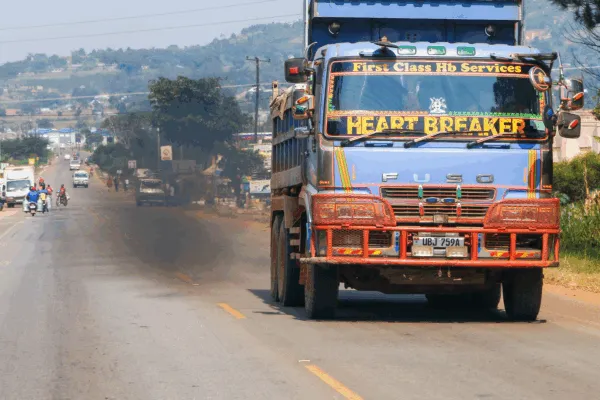
There is a new menace on America’s roads: diesel truck drivers who soup up their engines and remove their emissions controls to “roll coal,” or belch black smoke, at pedestrians, cyclists and unsuspecting Prius drivers. Sgt. Chris Worthington of the Montrose Police Department here is out to stop them. “You can hear those trucks across town, driving like idiots,” he said on a recent Friday evening patrol. He is among the first law enforcement officers in the country to be trained at “smoke school” to pick up the skills to police the coal rollers. He lost sight of one truck cruising in the opposite direction, trailing plumes of smoke. But another, a Ram 3500 fitted with two steel smokestacks, was parked in a Walmart parking lot. The owner, Pryce Hoey, insisted his truck was emissions compliant, but nevertheless agreed to demonstrate its smoke-generating prowess. “I just wanted something different,” Mr. Hoey said, revving the engine and releasing two black pillars of smoke into the evening air before Sgt. Worthington shut him down. “People who see it giggle. They think it’s funny.” Depending on whom you ask, rolling coal is a juvenile prank, a health hazard, a stand against rampant environmentalism, a brazen show of American freedom. Coal rollers’ frequent targets: walkers, joggers, cyclists, hybrid and Asian cars and even police officers. A popular bumper sticker reads “Prius Repellent.”

Read the full article @ NY Times


Monday, August 22, 2016

Cloth Masks Provide Very Little Protection Against Air Pollution

Researchers at the University of Massachusetts Amherst have suggested that in order to reduce exposure to air pollution wearing inexpensive cloth masks could be of only a little help and give you a false sense of security, especially in highly polluted areas. Washable cloth masks are widely used in India and other Asian for personal protection against airborne particulate matter.

"Wearing cloth masks reduced the exposure to some extent," but "the most commonly used cloth mask products perform poorly when compared to alternative options available on the market," said the study by scientists at University of Massachusetts Amherst. In a series of experiments with an experimental mannequin in Nepal, the researchers tested four masks -- one pleated surgical type, two cloth and one cone-shaped cloth with exhalation flaps. They tested for several variables and effectiveness in filtering out five different synthetic aerosol particle sizes plus three particle sizes of diluted whole diesel exhaust, which simulated real-world conditions.


Among the cloth masks, the one with exhaust valves performed fairly well, removing 80-90 percent of synthetic particles and about 57 per cent of diesel exhaust. Plain cloth masks were "only marginally beneficial" they said, in protecting people from particles smaller than 2.5 micrometers, often considered more harmful than larger particles because they can penetrate the lungs more deeply.

"Unfortunately, the least effective two mask types are also inexpensive, reusable and are widely used in developing countries, implying they are a popular consumer choice where pollution mitigation is warranted," the authors noted.

Read the full article @ India TV

Tuesday, August 16, 2016

Confusion Over the Diesel Vehicle Ban in Delhi

Automobile makers may cheer Friday’s order by theSupreme Court lifting the ban on registration of diesel vehicles with engine capacity over 2,000 cc in Delhi, but the government and green groups are opposing various of its aspects.

The ban on registration of passenger vehicles with diesel engines of 2,000 cc or more was imposed in December as a temporary measure to reduce air pollution in the capital. On Friday, a bench headed by Chief Justice T S Thakurhad ordered one per cent of such vehicles’ ex-showroom price be paid by manufacturers and distributors for registration in Delhi.

The funds collected from this levy was ordered to be deposited in an account of the Central Pollution Control Board (CPCB) to be opened in any public sector bank. However, CPCB officials said the government itself had filed an application against Friday’s order. The new levy has been named environment protection charge after the government argued imposition of taxes was the prerogative of Parliament. Solicitor-General Ranjit Kumar on Friday moved an application against the order, which the court is likely to consider at the next hearing. “No bank account has been opened because details of the Supreme Court order like the rate of tax is sub judice,” a CPCB official said. With the court not specifying the date of the next hearing, the matter has become more complicated.

Read the full article @ Business Standard

Wednesday, July 20, 2016

Delhi is Going Off the Track by Banning Old Vehicles and Allowing for More Newer or Secondhand Vehicles


The National Green Tribunal’s (NGT) crusade to improve the quality of Delhi’s air has very often meant a single point agenda: Clamping down on diesel vehicles. In April last year it had said diesel vehicles older than 10 years should not ply on the city’s roads. The green body’s directions created confusion for authorities in Delhi while it did precious little to improve the city’s seriously polluted air. The Delhi Traffic Police and the RTO were confounded as to who would implement the tribunal’s orders and the police found out that issuing challans did not deter diesel car drivers from bringing their vehicles back on the road. The NGT has now asked the RTO to de-register all diesel vehicles that are more than 10 years old.

See what's polluting Delhi?

There is no quarrel with the contention that diesel vehicles pollute. However, the extent to which diesel vehicles are responsible for Delhi’s bad air is open to debate. An IIT- Kanpur study notes that they are responsible for only 2 per cent of Delhi’s pollution. Other studies, including those by environmental groups, cite a higher figure. However, given the grave proportions that pollution in Delhi has assumed, corrective measures are called for. The significance of the NGT’s directive should be seen from that perspective. And it’s here that the green body’s directive fails to hit the right target. While on paper, it may mean that thousands of vehicles could go off the road, it’s anybody’s guess if that will happen in reality. Earlier bans have failed in their objectives. Vehicle owners could well find it convenient to register their 10-year-old automobiles elsewhere in the NCR — Gurgaon or Noida, areas not bound by the NGT’s directives.


Delhi’s traffic anyhow does not comprise only vehicles registered in the city. Commercial as well as personal vehicles from the NCR — as well as other states — ply on Delhi’s roads. The court order does not distinguish between vehicles used for personal purposes and those that transport necessities. There is also the danger that the order may mean that Delhi will be transporting its pollution elsewhere. The aged vehicles from the capital may find their way to second-hand car markets in other parts of the country, especially smaller towns — that are not doing too well on the pollution front. Tackling Delhi’s pollutions requires a long-term vision, that also encompasses regulating diesel vehicles. Such vehicles can be phased out. But knee-jerk reactions like bans will do more harm than good.

Read the full article @ the Indian Express

Friday, July 08, 2016

Taxing Diesel Vehicles in UK for Pollution Control

The “diesel-gate” scandal of last year, in which Volkswagen was revealed to be rigging emission tests, has focused public and policy maker attention on the issue of harmful emissions from diesel vehicles. Since the late 1980s, diesel cars and vans have made up an increasing proportion of new vehicles sold in Britain and across the European Union. In the UK they now represent almost four in ten cars on the road, compared to closer to one in 20 in the early 1990s.

The move to diesel, an area in which European car manufacturers have always had an advantage over their America and Japanese rivals, was strongly encouraged by policy makers through tax incentives and environmental regulations at both the national and the European level. There was a perception that, although diesel was known to have a bigger impact on air quality than petrol, it produced fewer carbon emissions and a switch to diesel would help slow climate change.

Since then three things have fundamentally changed. Advances in hybrid and electronic cars have produced a form of mass transport which avoids a trade-off between climate change and air quality, the emissions scandal has shown that this trade off may have always been worse than assumed, and there has been a growing recognition that increased NOX levels from diesel vehicles are creating what has been called a public health emergency. In the UK alone, air pollution is contributing to 40,000 to 52,000 premature deaths annually.

This is the background to a new policy report produced for Green Budget Europe (GBE), the campaigning organisation fighting to shift taxation away from labour and on to pollution both in Britain and in Europe. It was launched at a roundtable assembled by Prospect in collaboration with GBE.

Read the full report @ Prospect Magazine

Sunday, March 27, 2016

Kathmandu Valley is Choking with Air Pollution


@ Himalayan Times - Constitution of Nepal has established ‘Right to Clean Environment’ as fundamental right of the citizens. It states, “Every person shall have the right to live in a clean and healthy environment.” There is also a provision that ‘victims of environmental pollution or degradation shall be entitled to compensation from the polluter as provided in the law’.

The Environmental Protection Act and National Ambient Air Quality Standard require the government to create a healthy and clean environment for people. But the government lacks specific plans and programmes to control pollution to make the Valley a cleaner place to live and breathe in.

The capital city, which is bursting at the seams with population growing rapidly, with which comes rapid urbanisation, is choking on polluted air. Numbeo, a crowd-sourced global database, has ranked Kathmandu (score 96.66 out of 100) the third most polluted city in the world after Tetovo (Macedonia) and Cairo (Egypt) at Pollution Index 2016. The situation of air quality is worsening in the Valley with each passing day.

Sadly, the DoE, the pertinent government agency tasked with monitoring ambient air quality of the Kathmandu Valley and formulating and implementing policies accordingly, is ill-equipped. Six monitoring stations were set up to monitor ambient air quality of the Kathmandu Valley in 2002, but they went kaput in 2007 and since then the agency has been relying on international agencies for measuring air quality. Govinda Prasad Lamichhane, Environment Inspector at the DoE, said that the government, in collaboration with ADB-funded Kathmandu Sustainable Urban Transport Project and ICIMOD, had been preparing to set up nine state-of-the-art real time monitoring stations with display board in the Valley, within this fiscal.

“We have already concluded an agreement with KSUTP in this regard to set up four monitoring stations. DoE will invest in three and ICIMOD two stations. It will assist us in monitoring the air pollution and act accordingly,” he added. Lamichhane said the government was also promoting the use of emission free electric vehicles and monitoring brick kilns to improve the air quality.

Vehicular emission is the major cause for deteriorating air quality in the urban areas where vehicular emission is much aggravated by substandard or adulterated fuel, narrow and poorly maintained streets, poor traffic management, old vehicles and poor vehicular maintenance.
Saturday, December 12, 2015

NGT says STOP Registering Diesel Vehicles in NCT


Irked with the Centre and the Delhi government for seeking more time to address the issue of phasing out diesel vehicles, the National Green Tribunal Friday directed that no diesel vehicles be registered in the capital till January 6. “In view of the serious contribution of vehicular pollution to the air quality of NCT, Delhi, it is important that the government should take a serious view and a decision (on) whether any vehicle — particularly diesel vehicle (old or new) — should be registered… As an interim measure till next date of posting subject to hearing of all concerned parties, we direct that diesel vehicles of more than 10 years of age as already directed, as well as new diesel vehicles, would not be registered in NCT, Delhi,” directed the bench headed by Justice Swatanter Kumar.

Read more @ Indian Express

Wednesday, October 07, 2015

More Than 80,000 Trucks Passing Through Delhi Everyday (CSE)

Massive numbers of commercial vehicles entering and leaving Delhi: On a daily basis, some 38,588 commercial vehicles (excluding taxis) enter Delhi only from the nine locations. If this is extrapolated to the 127 entry points, then a total of 52,146 commercial vehicles (excluding taxis) enter Delhi. The survey had measured vehicles in both directions. And while it is difficult to know if the same vehicle has entered and then left Delhi on the same day, it is clear that the total number has an imprint on Delhi’s air as these vehicles will traverse through the city. The daily average numbers of light and heavy goods vehicles that enter and exit from the nine points are 85,799. The total number of commercial light and heavy duty trucks entering and leaving the city is 115,945 each day.

Read more @ CSE


The MCD estimate of the number of trucks crossing Delhi borders is grossly underestimated and is unreliable for calculating pollution load from trucks: According to MCD data, on an average only 22,628 commercial vehicles, excluding taxis, enter Delhi each day from nine entry points, as against the 38,588 commercial vehicles counted by CSE survey – almost 16,000 vehicles less. This is an underestimate of about 70 per cent in the number of trucks entering from the nine entry points.

Thus, according to the MCD, the total number of light and heavy trucks that enter Delhi everyday from all entry points is 30,373. This is even lower than what the CSE survey counted at nine entry points. Thus, MCD data on daily average truck entry is an underestimation by an astounding 70 per cent. The gap in different entry points varies in the range of 50-96 per cent. The survey establishes that the official numbers of truck entry into the city are a gross underestimation and they end up seriously under-estimating the health impact of these vehicles in the city.

Enormous contribution to pollution load: Delhi’s own vehicles are responsible for 62 per cent of the particulate load from the transport sector and 68 per cent of the NOx load. The total number of light and heavy trucks that enter Delhi spew close to 30 per cent of the total particulate load and 22 per cent of the total nitrogen oxide load from the transport sector.

Monday, August 10, 2015

Diesel vs. CNG Buses in Delhi !!

The advocacy group Embarq studied emissions from buses run on different fuels in Mexico, Brazil and India, and found that CNG buses emit more micro particles. “Lowsulphur diesel particles were found to be slightly bigger than those from CNG. We also found that overloaded CNG vehicles emit even more micro particles,“ said Amit Bhatt, strategy head, urban transport, Embarq. “We can say that Euro V and Euro VI diesel is as good as CNG in terms of other pollutants, and superior if you consider particulate emissions,“ Bhatt added. For now, CNG can't be labeled a highly polluting fuel because its particulate emissions are lower than those from diesel. Anumita Roychowdhury , head of Centre for Science and Environment's Clean Air campaign, said European countries have started measuring ultrafine particles because they have addressed the problem of particulate emissions from diesel. India, however, should focus on reducing PM emissions that are a leading cause of death, she added. Read more @ Times of India

Tuesday, August 05, 2014

Re-Fueling Road Transport for Better Air Quality in Indian Cities

Journal Article @ Energy Policy

Road transport in India plays a vital role in our growing economy. Given an aggressive vehicle sales outlook through 2030, in order to maintain a balance between the energy demand, growing on-road emissions, and overall air quality in the cities, there is a need to implement and enforce Bharat-5 standards (equivalent of Euro-V) nationwide by 2015. Any delay in its implementation or even staggered implementation of the standards will result in a delayed response for improving air quality in the Indian cities.

Sunday, July 21, 2013

Data Availability for Measuring and Reporting Transport related Greenhouse Gas Emissions in Chinese Cities (GIZ)

China, one of the most rapidly growing countries in the world, is experiencing rapid and substantial growth in economic and motorized mobility. Transport related energy consumption and pollution problems are poised to soar further. In 2008, consumption of fossil fuels in the transport sector accounted for 36% of national total fossil fuel consumption.

Link to the GIZ Sustainable Transport Site

A fundamental requirement in the effort to control GHG-emissions and pollutants in any form is to quantify the emissions being released. A robust approach to measure energy savings and emission reductions in the end of the designed schedule is an essential element in reviewing the performance. A reliable and transparent model should be applied to track the emission reductions, but so far this kind of model is not publicly available in China.

The report on “Data Availability for Measuring and Reporting Transport related Greenhouse Gas Emissions in Chinese Cities” by the Institute of Comprehensive Transportation (ICT) and GIZ assesses availability and characteristics of data required for establishing a GHG emission quantification model in Chinese cities.

The Sino-German Climate Change Programme is implemented by the Deutsche Gesellschaft für Internationale Zusammenarbeit (GIZ) on behalf of the German Federal Ministry for Economic Cooperation and Development (BMZ) and the National Development and Reform Commission (NDRC).

Within the Low Carbon Transport Development component, the Programme supports national institutions in developing a climate protection strategy in the transport sector and to implement measures and incentive structures with a special focus on urban transportation. The Low Carbon Transport Development component therefore supports the development of tools to quantify and monitor GHG emissions in the Chinese transport sector both at the national and urban level.

Saturday, December 17, 2011

Wood Smoke and Uutdoor Air Pollution Costs Lives and Money in US Northwest

today..
From Mr. Lalloobhoy Battliwala

link to an article from NPR below, which quotes.. "In Washington, the state Ecology Department estimates that sooty pollution from sources including wood smoke and diesel exhaust contributes to 1,100 deaths and $190 million in health costs annually."

Now, should deaths be considered as savings in health costs?

*********

December 16, 2011, NPR
Where There's Smoke, There's Sickness: Wood Smoke now a major Northwest air polluter
by Robert McClure,

Wood Smoke now a major Northwest air polluter.

The warning label on the wrapping of neatly split firewood is one we're more accustomed to seeing on cigarettes or heavy-duty chemicals: "known... to cause cancer, birth defects or reproductive harm."

But in fact, heart attacks, strokes, high blood pressure, asthma attacks and premature death – in addition to cancer – all are linked to wood smoke pollution. It's a finding that poses a vexing dilemma for poor and rural communities around the Northwest where wood is a cheap or even free source of heat.

And in Tacoma, where the air is so dirty it violates the Clean Air Act, authorities are gearing up for what promises to be an arduous and expensive campaign over the better part of a decade to clean up wood smoke pollution. It's an effort that already has some residents chafing at government interference, and one that will set the stage for how other Northwest communities are treated when they bump up against tightened federal pollution standards.

In Tacoma and many towns across the Northwest, wood smoke is a prime culprit in driving spikes of sooty, toxic air pollution that leave some residents – particularly asthmatics, kids and the elderly – gasping for breath. It's especially bad during sunny, cold stretches like those we've seen in recent weeks, because atmospheric conditions trap the pollution close to the ground.

Read More on NPR.