Thursday, April 28, 2016

How NASA Is Using Space-Age Technology To Track Air Pollution

NASA is celebrated for space probes and Mars missions. But one of the agency’s next big projects could also make a major contribution to public health.

The U.S. space agency, along with agencies in Europe and South Korea, is making plans to launch a fleet of air pollution sensors into space. The sensors, which are being built by NASA, the European Space Agency and the South Korean government, are meant to monitor and track pollutants from orbit. Scientists hope NASA’s contribution to the project, called TEMPO, will provide a more accurate picture of how dangerous particles crisscross the Earth.

“Air pollution is really a global pollution,” Barry Lefer, a NASA scientist and project manager for TEMPO, told The Huffington Post. “Pollution from the U.S. travels to Europe, pollution from Asia travels to the U.S. And satellites are the best way to see the long-range transportation of pollution.”


The final product, which scientists say will be a “constellation” of pollution-tracking satellites, is still years away. But NASA plans to kick off the first phase of the project in May, when it will begin collecting air pollution data from the Korean peninsula in order to fine-tune its satellite-based pollution monitors.

Read more @ Huffington Post

Infographics by ToI - Air Quality During Delhi's Odd/Even Days - April 15th to April 30th


Cost of Coal in China: 375 Million Tonnes of Toxic Coal Ash


More @ Nature World News - China Reduces Coal-Fired Power Capacity Amid Clean Energy Concerns

Top 10 Best and Worst Tier II Cities in India, Based on Annual PM10 Pollution

Read more @ Live Mint - High air and water pollution in 41 Tier-II Indian cities

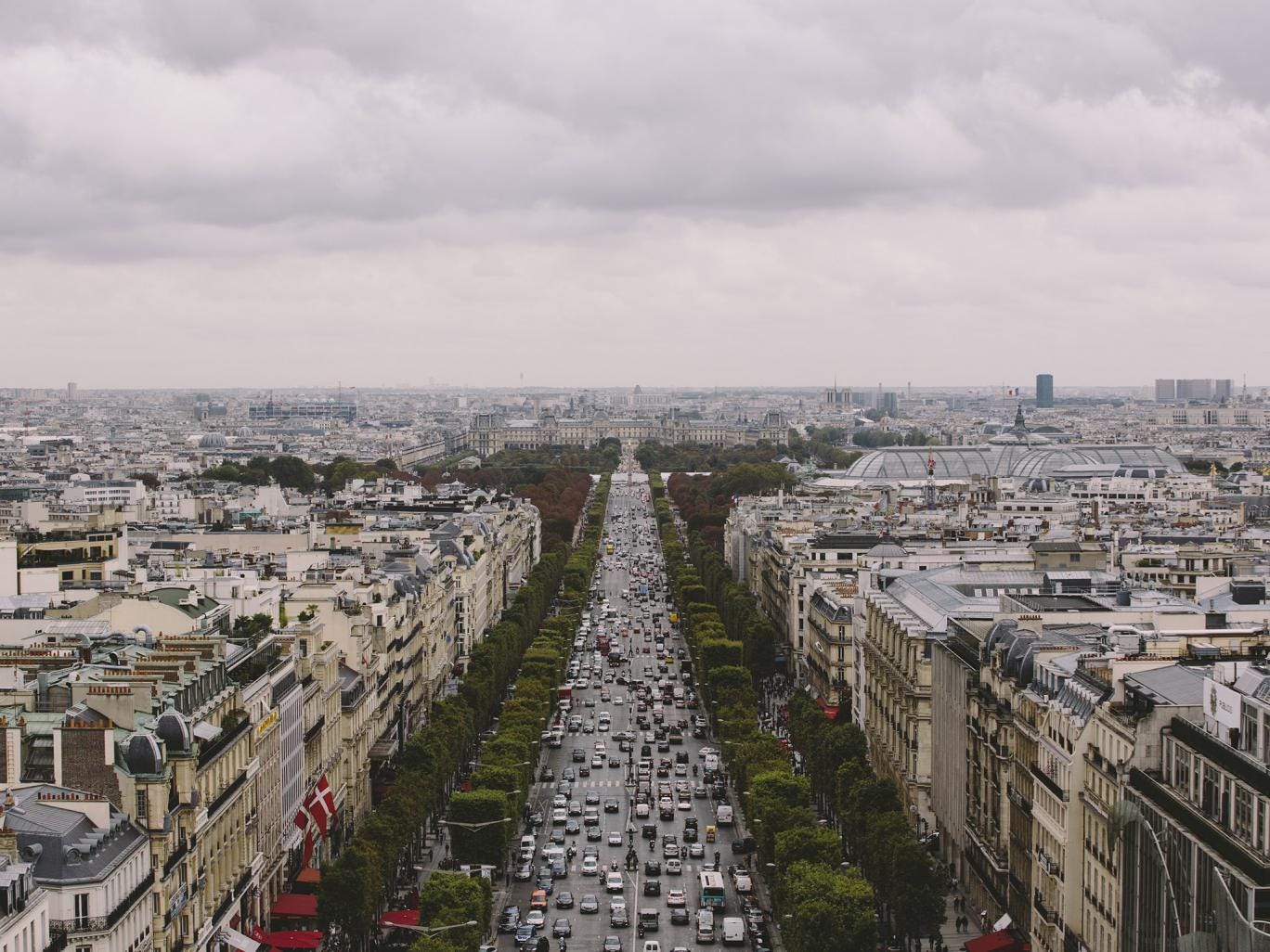
Paris to Ban Cars for One Day a Month


@ Independent - The Champs-Elysees – often described as ‘world’s most beautiful avenue’ – will soon be closed to traffic once a month as the city tackles its air pollution problem. The famous boulevard, along with four other areas, is one of nine new routes which will be car-free on the first Sunday of every month, joining 13 others already announced as part of the cities ‘Paris Breathes’ campaign.

Another four zones will also be pedestrian-only on Sundays, but just during summer months. The initiative, which will launch on 8 May - the second Sunday of the month due to a public holiday on 1 May – is part of a drive by Paris mayor Anne Hidalgo to reduce air pollution and smog in the city. The first Sunday of the month also happens to be the day when the city’s national museums have free entry.


He suggested London could learn a few lessons from the Paris example. “In London, which suffers some of the worst pollution in Europe, a traffic free day would be a welcome start," he said. “But we’re going to need much more than one day to prevent the thousands of early deaths each year caused by air pollution. London’s mayor has the powers to restrict diesel traffic on the worst pollution days. Boris Johnson’s successor must use them.

Real time air quality information from European Cities

The new measures in Paris are largely the result of a successful car-free Sunday in the city on 27 September last year. Between 9am and 4pm cars were banned in some key areas of the city, including the Champs-Elysees.  According to air quality network Airpartif, which monitors pollution levels in Paris, there was a 40 per cent drop in harmful exhaust emissions in parts of the city.


In March last year the air pollution reached such high levels a one-day ban on all cars with odd-numbered registrations was announced, halving the amount of vehicles in the city from 5am and significantly reducing the harmful emissions. Mrs Hidalgo, who has prioritised combating pollution in the city, won a long running battle with the French government for the right to introduce similar emergency measures in the event of any future air pollution spikes.

Read more @ Independent

Monday, April 25, 2016

Infographic - Emissions Analysis for Odd/Even Days in Delhi

Delhi announced to repeat the odd/even experiment from April 15th to 30th, 2016. Last time the experiment was conducted for two weeks between January 1st and 15th, 2016. The pilot was a social success, based on the reactions posted on the social media and printed in the other media. However, accordingly to CPCB, IITM, and TERI, the benefits of the program on the day time air quality was not immediately apparent in the ambient measurements, with likely large interference from meteorology. A difference in difference analysis comparing ambient PM2.5 data between Delhi stations and non-Delhi stations showed 10-13% drop in the day time concentrations.
In December, 2015, we released an infographic on possible benefits of restricting the on-road vehicles during the day time. Below is an emissions analysis comparing the emission rates from the passenger vehicles during a regular day and an odd/even day, based on what we understood has transpired during the two weeks of January, 2016.

Based on the monthly and seasonal air quality trends, April is one of the months with better air quality, compared to January. Question – do we need to repeat the experiment to know what is good for us, again? We will stick with our assessment on the need for an additional 15,000 buses in the city, to support a safe, comfortable, and reliable public transportation system, which will eliminate any need for such experiments.


More infographics on Delhi's air quality and transport

Monday, April 18, 2016

Power Consumption Peaking in Delhi Due to Heat

The city is battling the scorching sun with residents staying indoors and switching on the air-conditioners. It is just mid-April, but power consumption in the Capital has already crossed the 4,300 MW mark.

List of Power Plants Supporting Delhi

Outages have already started in residential areas with many people saying they were not informed about the power cuts. If the heat and power demand keep surging at this rate, experts say that peak demand may cross 6,000 MW by June or July. The highest power demand Delhi has met was 5,925 MW on July 15, 2014.

With this, the Capital became one of the largest consumers of electricity, surpassing the demand of all North-East States put together, besides Mumbai, Kolkata, Bihar and Odisha.

“The highest power demand this season was 4,343 MW at 3:20 p.m. on Saturday, which at 42 degrees Celsius has been the hottest day of this year so far. On Sunday, the demand was 4,170 MW,” said a power official.

Diesel Generators Power 60% of Cell-Phone Towers in India !!


Some areas, in fact, saw power cuts that stretched for over four hours. “Last year, people were informed at least a day before a scheduled outage. We ourselves could track the same on websites of the State load despatch centre and discoms. But now, we can only see the outages that have already happened,” said Vivek Khanna, a resident of Mayapuri, which saw a power outage of two hours due to a “breakdown” in the area’s distribution network.


Health Burden of Air Pollution from Coal-Fired Power Plants in India


Areas that saw power cuts over the weekend include Shiv Vihar, Tagore Garden, Ambedkar Nagar, Janakpuri, Panchsheel Park and Madhu Vihar, among others. Shiv Vihar faced the longest power of four hours. While discoms maintained that there was no power cut due to shortage of electricity, they said that on many occasions outages occur due to repair work or breakdowns due to excessive load.

What's Polluting Delhi's Air?


The city, meanwhile, is likely to get some respite with a dust storm and thunderstorm in the forecast for Monday - see the forecasts @ www.indiaairquality.info

Saturday, April 16, 2016

Asia Won't Abandon Coal

Reports of coal’s death appear to have been greatly exaggerated, at least judging by major Asian importers’ continued commitment to the black gold. Despite reviving nuclear energy, Japan has given the green light to more coal-fired power plants, after importing a record amount of thermal coal in 2015. Meanwhile, coal demand is set to hit a new record high in neighbouring South Korea, while Taiwan’s new government could back increased coal imports to replace ageing nuclear reactors. 

Added to the emerging demand from ASEAN and India, and suddenly coal bulls have reason for optimism after a year to forget for the global industry, including a drop in demand by China. China accounted for 50% of global coal consumption in 2014, but now plans to cut around 500 million t of production over the next 3 – 5 yr. This would be achieved by closing more than 5000 coal mines, retraining and relocating workers and not approving any new mines for the next three years.

IEA said it expected worldwide coal consumption to continue growing at a rate of 0.8% a year through to 2020, with the strongest growth seen in ASEAN (up 7.8% a year) and India (up 4.1% per annum). India is seen as replacing China as the world’s largest coal importer, with Australia deposing Indonesia as the largest exporter.

With key Asian economies turning to coal for affordable and abundant energy, some 400 GW of power generation capacity – roughly equal to the combined installed capacity of Japan and South Korea – is expected to be added across the region through to 2040, of which 40% will be coal-fired, the World Coal Association noted. Japan could build as many as 41 new coal-fired power plants over the next decade, with some 23 GW of new coal capacity under development as of 2015 compared to total capacity of 41 GW in 2014. According to the Korea Energy Economics Institute (KEEI), South Korean coal demand will increase by over 6% to more than 140 million t in 2016, following the startup of nine new plants with a combined capacity of 7.7 GW.

Read more @ World Coal

Delhi CM... Odd/Even Did Not Lower Pollution As Expected, However, It Reduced Traffic Congestion

@ Live Mint - Delhi chief minister Arvind Kejriwal on Wednesday said the implementation of the odd even scheme in January did not lower pollution “as much as expected” but it significantly helped reduce traffic congestion in the city.

“Odd even did lower pollution but not as much as expected, however, it significantly reduced traffic congestion, the roads were cleared and people liked it very much,” he said in reply to a question by a girl student at Sarvodaya Balika Vidyala in New Delhi.

Infographic - Emissions Analysis for the odd/even days

The odd even scheme was implemented on an experimental basis from 1 January to 15 January in view of high air pollution in the national capital. The second phase of the scheme will commence on 15 April.The government is taking other measures to check air pollution in the city including introduction of luxury buses with increased frequency to popularise public transport and vaccum cleaning of the roads, he said. “In the next 2-3 months, we will ensure vacuum cleaning of over 1000 kms of roads in the city,” he said.

China's Power Use Up 5.6% in March, 2016

@ China Daily - China's electricity consumption rose at a faster pace in March as economic activity and residential demand picked up. Power consumption rose 5.6 percent year on year last month, reaching 476.2 billion kilowatt hours (kWh), said Zhao Chenxin, spokesperson for the National Development and Reform Commission, at a press conference.

The growth accelerated by 1.6 percentage points from February and improved markedly from a 2.2-percent contraction in March last year. For the first quarter of 2016, power use increased 3.2 percent year on year to 1.35 trillion kWh, with the growth rate up 2.4 percentage points from the same period of last year, Zhao said. He attributed the recovery to stronger demand in the service sector and households, which contributed to an increase of 3 percentage points in the first-quarter growth.

Power use by the service sector jumped 10.9 percent year on year in the first three months, up 4 percentage points from a year earlier. That by Chinese households gained 10.8 percent, up 8.2 percentage points. The financial, real estate, catering and hotel industries all recorded faster increases in power consumption, according to Zhao. Electricity used by the industrial sector climbed 0.2 percent in the first quarter, exiting negative territory but still at a relatively low level of growth, the spokesperson said. 

Oil consumption also pointed to a stabilizing economy, with March consumption of refined oil rising 7.2 percent year on year, improving from January and February. Diesel consumption, which reflects industrial and agricultural activity, went up 3 percent in March, compared with year-on-year drops in January and February, Zhao said. China's economy expanded by 6.9 percent, the slowest pace in 25 years, in 2015. First-quarter economic data will be released later this week.

Delhi's Car Limits Won't Clean Up City's Filthy Air

@ CNN - New Delhi is preparing to pull millions of cars off its streets for the second time this year as the local government searches for a way to improve air quality in the world's most polluted city. The driving restrictions, dubbed "odd-even," will limit drivers to using their cars on alternate days for two weeks starting Friday. The idea is that fewer cars on the road will reduce vehicle emissions and improve air quality.

Just one problem: Experts say the program will likely have only negligible benefits, and is a far cry from the comprehensive approach needed to markedly improve air quality in the megacity of 20 million. "People are just rallying behind a feel-good policy," said Rahul Goel, an assistant professor at Shiv Nadar University, who studied traffic patterns during the initial phase of "odd-even" in January. Goel's team found that while car traffic eased during the experiment, potential emissions improvements were offset by an increase in the number of motorcycles and autorickshaws on the road. A second study, conducted by researchers from the University of Chicago, found there was a 10% decrease in air pollution levels during the program's initial phase.

"Did it work in January? With a bunch of caveats, yes," said Santosh Harish, assistant director of EPIC India, who noted that changes in weather and commercial traffic patterns can make it difficult to identify the source of air pollution improvements.