Showing posts with label Delhi Odd Even. Show all posts

Monday, January 30, 2017

Getting Odd-Even Right - Lessons from Beijing, Paris, and London

We know by now that air pollution is not a standalone problem in a city but is essentially a symptom of inadequate planning. Policymakers can implement one-off solutions against air pollution but the best short-term results are possible only when they are fully implemented with no exemptions. One example is Beijing during the 2008 Olympics. Based on satellite observations, and during the two months when stringent restrictions were in place, the levels of nitrogen dioxide resulting from fossil fuel combustion plunged nearly 50% and the levels of carbon monoxide fell by almost 20%. The measures were good at quickly lowering the pollution but since they weren’t addressing the root problem, they could do nothing once the stay order was lifted. The battle against air pollution in Beijing recently led to an announcement of ‘anti-smog police force‘ and an expenditure of $2.6 billion to bring back clear sky days to the city.

The measures introduced in Beijing have become somewhat of landmark examples to achieve quick mitigations. These include a 50% cap on vehicles everyday based on the registrations, full support from the public transport sector, shutdown of industries and power plants within a radius of 100 km for at least a month before the games began and a strict enforcement of a ban on burning coal and biomass for cooking and heating. It was a matter of national pride; every citizen in the city chipped in to make sure the sky was blue and the air was clear.

The most talked about scenario is the 50% cap – a.k.a. the odd-even program. Key features that led to the program’s success were limiting the exemptions to emergency vehicles, thousands of number plate recognition cameras to aide traffic police and a wide network of railways and roads to take on the additional load. This was a proactive measure, knowing that air quality during the games would be bad but had to be better.

In 2016, the Delhi government played with the odd-even theme twice, for two weeks each in January and April, with a lot of exemptions and even a temporary increase in public transport capacity. Neither pilot pointed to a clear reduction in pollution. The reasons are plenty: the share of pollution from other sources is equally significant; the prevalent weather brought down pollution from the fires in Uttarakhand and there is limited information to statistically argue for success. General reports showed lesser congestion, faster speeds on the road and 13% more daily revenue for the Delhi Transport Corporation.

In December, 2016, Paris also implemented an odd-even program, in advance, due to an anticipated red alert for the city, and to make the program a success, made all public transport modes free. Their biggest advantage is that transport is their only big source of pollution in the city, followed by coal and wood burning for heating purposes, which means cutting down the traffic by 50% and a wide media campaign to alert people to not burn coal or wood, but use electricity for heating, gives them immediate benefits.

Read more on this @ the WIRE

Tuesday, May 10, 2016

Delhi's Odd/Even Experiment Cannot be Permanent

Opinion Piece by Ms. Jyoti Parikh, India Express - Cleaning up Delhi’s air requires both short-term and long-term solutions. Typically, the control of a number of short-term solutions lies with the Delhi government, while long-term solutions require the Central government to act.

Odd-even cannot be a long-term solution for the NCR as the number of vehicles in Delhi alone, not counting the NCR region, is increasing at nearly 6 lakhs per year in Delhi alone, of which some 35 per cent are cars. Odd-even may have taken out at most 30 per cent of the cars of Delhi’s 28 lakh cars as cars on the road keep increasing and within a couple of years, even with odd-even, the cars on the road would increase. To reduce pollution, we need cleaner cars and much greater use of public transport, walking, cycling and improvement in the quality of public transport. The solution lies in a more comprehensive transport strategy and dealing with other sources of pollution. It requires actions not just by Delhi government, but also by governments of the surrounding states as well as by the Central government.

Friday, May 06, 2016

Delhi's Odd Even Experiment 2 - Analysis of PM Monitoring Data from SAFAR Program


Delhi's Odd Even Experiment - Analysis of Ambient PM Data by CSE, India

Centre for Science and Environment (CSE) has released its analysis of air quality data during the second phase of odd and even scheme – from April 15 to April 30. This shows that air pollution took a downward dip during the first 10 days of the scheme but registers a sudden spike from April 22 onwards. Read the full report @ CSE


Further investigations and analysis of NASA satellite pictures has exposed massive crop fires in Punjab and Haryana that started around April 19 – which could be the reason behind the rise in pollution levels. The CSE investigation was triggered by the widespread media reportage on the findings of India Spend that PM2.5 had increased by 23 per cent and PM10 by 22 per cent compared to the previous fortnight. This was also used by the automobile industry in the Supreme Court hearing on April 30, 2016 to claim that this shows that vehicles are insignificant contributors to pollution and therefore do not merit stringent action.


The CSE investigation has exposed how half-baked and irresponsible explanation of the air quality trend has led to misinterpretation of the benefit of the odd-and-even scheme and helped create the industry myth that vehicles are not the problem. India Spend and the industry have failed to catch the reason for the sudden spike in pollution post-April 22. They have missed the massive crop fires that started around April 20 and got intense over time and elevated pollution not only in Delhi, but in other cities of northern India as well.

Delhi's Odd Even Program Prevented Increase in Pollution

What is damaging is that in the absence of clear explanation of the reasons for the pollution spike towards the end of the scheme, this has led to the misleading conclusion that odd-and-even has not made any impact.

Registration of Vehicles After Being Retro-fitted with CNG Kits Rose by 15-20% in Delhi

Whatever the odds stacked against the odd-even scheme rolled out by the Delhi state government to curb air pollution, a positive fallout has been the rise in the instances of CNG conversions from petrol-engined cars in the capital city. Registration of vehicles after being retro-fitted with CNG kits rose by 15-20 percent during the recent implementation of phase II of the odd-even scheme with about 200 conversions to CNG witnessed against 150 reported on routine days, Anil Chhikara, auto expert and government official in the Transport Department, told Autocar Professional.

In terms of new sales of OE-fitted CNG vehicles, a major impact was not visible as this segment has been growing 20 percent annually for the past 2-3 years. About 150 registrations of factory fitted CNG cars are noted by the Transport Department on an average every day and these were more or less on track while the odd-even scheme was underway between 15-30 April as well. Hence the rise is more gradual and based on shifting customer preferences.


Interestingly, the front runners for the CNG retrofitment were small cars going upwards to the midsize segment with a sticker price of up to Rs 7 lakh where the Hyundai i10, Santro, Honda Jazz, Amaze and even the City were in the forefront. Maruti Suzuki, the country’s largest carmaker, has a stable of 6 models available with a CNG option – the Alto, Alto K10, Celerio, Wagon R, Eeco and the Ertiga. These are already selling large CNG volumes in the capital. Maruti sold over 59,800 units of its CNG fleet in 2015-16 compared to 58,000 units in FY 2014-15. The Wagon R takes the lead with sales of over 29,000 units, followed by the Eeco with over 11,000 units.

Road Transport Emissions in Delhi

Meanwhile a tete-a-tete with the CNG retrofitters throws some more light on the CNG fitment scenario in the Delhi-NCR. The New Delhi-based Namdhari Auto Engineering Works retrofitted around 25-30 cars during the 15 days that the odd-even scheme ran. Ranjit Namdhari, owner of the fitment centre, says around 2,500-3,000 retrofitment instances were undertaken in the region during this period overall. The CNG kit costs Rs 30,000 upwards at his centre and takes about 5-6 hours for a CNG conversion from petrol.

Read the full article @ Auto Car Professionals

Sunday, May 01, 2016

Delhi Odd/Even Experiment 2 - PM2.5 Concentrations Before and During - Data from India Spend Monitors

Read @ First Post. Air pollution levels in Delhi rose 23 percent during the second phase of the odd-even registration rule, from 15 April to 29 April, over the previous 14 days (1 April to 14 April), based on an analysis of PM (particulate matter) 2.5 data, generated by IndiaSpend’s #Breathe air-quality monitoring devices.


Thursday, April 28, 2016

Infographics by ToI - Air Quality During Delhi's Odd/Even Days - April 15th to April 30th


Paris to Ban Cars for One Day a Month


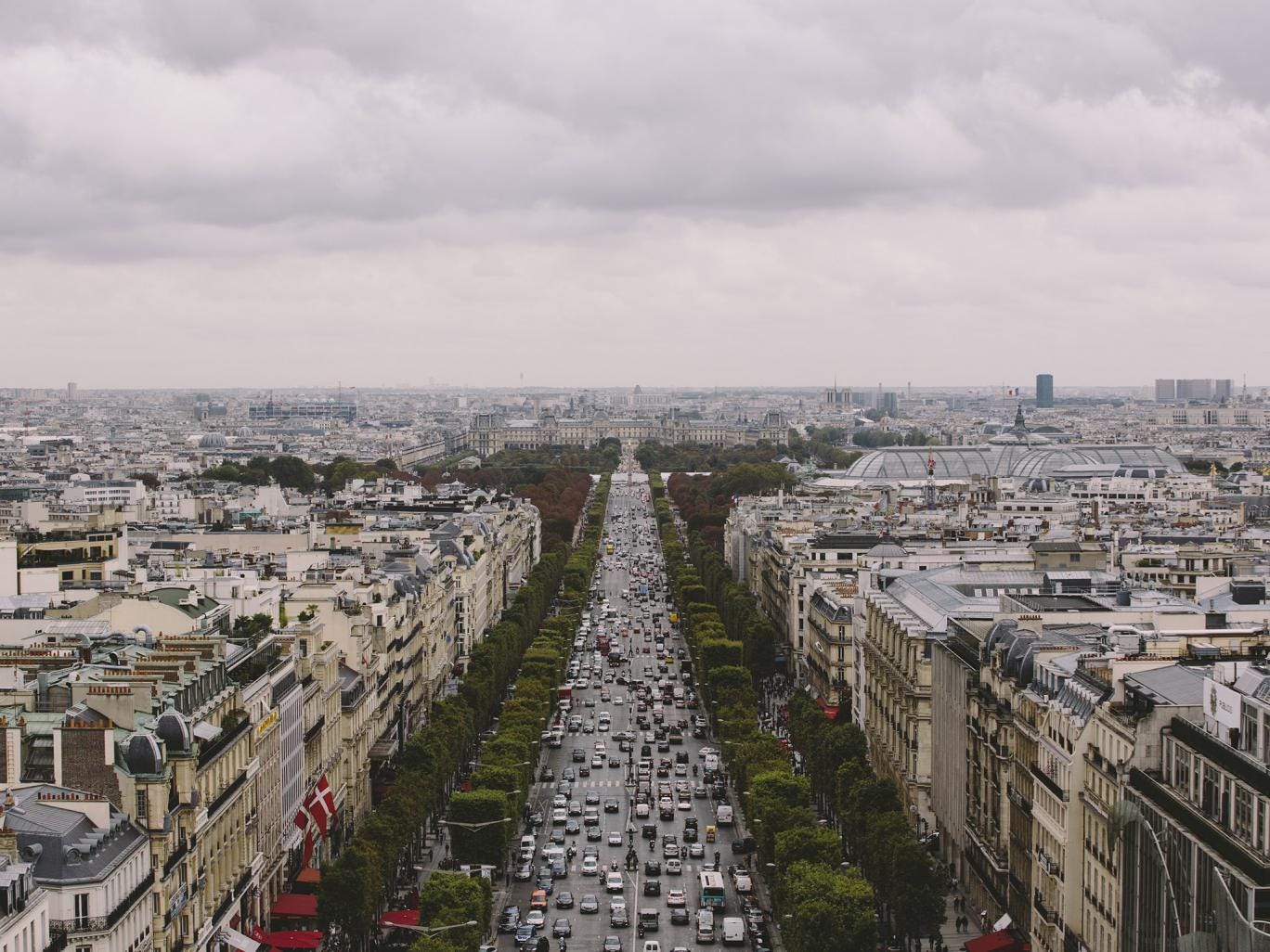
@ Independent - The Champs-Elysees – often described as ‘world’s most beautiful avenue’ – will soon be closed to traffic once a month as the city tackles its air pollution problem. The famous boulevard, along with four other areas, is one of nine new routes which will be car-free on the first Sunday of every month, joining 13 others already announced as part of the cities ‘Paris Breathes’ campaign.

Another four zones will also be pedestrian-only on Sundays, but just during summer months. The initiative, which will launch on 8 May - the second Sunday of the month due to a public holiday on 1 May – is part of a drive by Paris mayor Anne Hidalgo to reduce air pollution and smog in the city. The first Sunday of the month also happens to be the day when the city’s national museums have free entry.


He suggested London could learn a few lessons from the Paris example. “In London, which suffers some of the worst pollution in Europe, a traffic free day would be a welcome start," he said. “But we’re going to need much more than one day to prevent the thousands of early deaths each year caused by air pollution. London’s mayor has the powers to restrict diesel traffic on the worst pollution days. Boris Johnson’s successor must use them.

Real time air quality information from European Cities

The new measures in Paris are largely the result of a successful car-free Sunday in the city on 27 September last year. Between 9am and 4pm cars were banned in some key areas of the city, including the Champs-Elysees.  According to air quality network Airpartif, which monitors pollution levels in Paris, there was a 40 per cent drop in harmful exhaust emissions in parts of the city.


In March last year the air pollution reached such high levels a one-day ban on all cars with odd-numbered registrations was announced, halving the amount of vehicles in the city from 5am and significantly reducing the harmful emissions. Mrs Hidalgo, who has prioritised combating pollution in the city, won a long running battle with the French government for the right to introduce similar emergency measures in the event of any future air pollution spikes.

Read more @ Independent

Monday, April 25, 2016

Infographic - Emissions Analysis for Odd/Even Days in Delhi

Delhi announced to repeat the odd/even experiment from April 15th to 30th, 2016. Last time the experiment was conducted for two weeks between January 1st and 15th, 2016. The pilot was a social success, based on the reactions posted on the social media and printed in the other media. However, accordingly to CPCB, IITM, and TERI, the benefits of the program on the day time air quality was not immediately apparent in the ambient measurements, with likely large interference from meteorology. A difference in difference analysis comparing ambient PM2.5 data between Delhi stations and non-Delhi stations showed 10-13% drop in the day time concentrations.
In December, 2015, we released an infographic on possible benefits of restricting the on-road vehicles during the day time. Below is an emissions analysis comparing the emission rates from the passenger vehicles during a regular day and an odd/even day, based on what we understood has transpired during the two weeks of January, 2016.

Based on the monthly and seasonal air quality trends, April is one of the months with better air quality, compared to January. Question – do we need to repeat the experiment to know what is good for us, again? We will stick with our assessment on the need for an additional 15,000 buses in the city, to support a safe, comfortable, and reliable public transportation system, which will eliminate any need for such experiments.


More infographics on Delhi's air quality and transport

Saturday, April 16, 2016

Delhi CM... Odd/Even Did Not Lower Pollution As Expected, However, It Reduced Traffic Congestion

@ Live Mint - Delhi chief minister Arvind Kejriwal on Wednesday said the implementation of the odd even scheme in January did not lower pollution “as much as expected” but it significantly helped reduce traffic congestion in the city.

“Odd even did lower pollution but not as much as expected, however, it significantly reduced traffic congestion, the roads were cleared and people liked it very much,” he said in reply to a question by a girl student at Sarvodaya Balika Vidyala in New Delhi.

Infographic - Emissions Analysis for the odd/even days

The odd even scheme was implemented on an experimental basis from 1 January to 15 January in view of high air pollution in the national capital. The second phase of the scheme will commence on 15 April.The government is taking other measures to check air pollution in the city including introduction of luxury buses with increased frequency to popularise public transport and vaccum cleaning of the roads, he said. “In the next 2-3 months, we will ensure vacuum cleaning of over 1000 kms of roads in the city,” he said.

Delhi's Car Limits Won't Clean Up City's Filthy Air

@ CNN - New Delhi is preparing to pull millions of cars off its streets for the second time this year as the local government searches for a way to improve air quality in the world's most polluted city. The driving restrictions, dubbed "odd-even," will limit drivers to using their cars on alternate days for two weeks starting Friday. The idea is that fewer cars on the road will reduce vehicle emissions and improve air quality.

Just one problem: Experts say the program will likely have only negligible benefits, and is a far cry from the comprehensive approach needed to markedly improve air quality in the megacity of 20 million. "People are just rallying behind a feel-good policy," said Rahul Goel, an assistant professor at Shiv Nadar University, who studied traffic patterns during the initial phase of "odd-even" in January. Goel's team found that while car traffic eased during the experiment, potential emissions improvements were offset by an increase in the number of motorcycles and autorickshaws on the road. A second study, conducted by researchers from the University of Chicago, found there was a 10% decrease in air pollution levels during the program's initial phase.

"Did it work in January? With a bunch of caveats, yes," said Santosh Harish, assistant director of EPIC India, who noted that changes in weather and commercial traffic patterns can make it difficult to identify the source of air pollution improvements.

Wednesday, April 13, 2016

Delhi Government Initiatives.... Odd/Even Phase 2 Starts on April 15th, 2016


@ Economic Times - Delhi government today issued a notification on the fortnight ­long odd­even car­ rationing scheme that comes into force from April 15, but there is still no clarity as to how parents would pick up their children from schools during the implementation period. The Arvind Kejriwal government has decided to exempt women and cars carrying schoolchildren in uniform in the second round of the road­ rationing plan. Chief Minister Arvind Kejriwal on Saturday said that there are cases where a child may not be in the car on one side of the journey and it will cause a little trouble to parents. Kejriwal advised parents to explore the car­pooling option or "adjust" their children with neighbours as there will be just nine working days during the scheme.

Infographic - Emissions Analysis for Odd/Even Days in Delhi


In the notification, the city government said violation of odd­even rules will attract a fine of Rs 2,000 in accordance with the provisions of sub­section (1) of section 194 of Motor Vehicles Act, 1988.

Air Quality in Delhi (daily updates)


Other exemptions include VIP and CNG cars, cases of medical emergency and cars carrying disabled persons. On Saturday, Chief Minister Kejriwal had said that his government was "seriously" mulling a proposal to enforce the odd­even scheme for 15 days every month. Transport Minister Gopal Rai said Delhi Transport Corporation (DTC) and Delhi Metro Rail Corporation (DMRC) have geared up to tackle any extra rush as commuters turn to public conveyance during the period when the odd­even scheme is in force. "Metro will increase its trips to 3,248 per day and add 30 coaches.

What's Polluting Delhi's Air?


Extra security personnel would be deployed and number of ticket counters at metro stations would be increased," he said.