Air pollution is a growing problem in most cities (big and small). The "Daily Dose" aims to disseminate the best available information on air pollution and engage in discussions to better understand the process of air quality management. For more details visit https://www.urbanemissions.info
Showing posts with label Air Pollution in Singapore. Show all posts
Showing posts with label Air Pollution in Singapore. Show all posts
The haze that affected Singapore from Friday to Sunday was caused by forest fires burning in Rokan Hilir in Sumatra's Riau province, Indonesia's National Disaster Management Agency (BNPB) said yesterday. Dr Sutopo Purwo Nugroho, who heads the BNPB's data and information division, said the smoke was carried to Singapore by winds unleashed by Typhoon Lionrock in the Philippines.
The tropical cyclone has since left the Philippines and was moving towards Japan yesterday. Satellites detected 162 "fire alerts" in the Rokan Hilir regency between Friday and Sunday. The fire alerts accounted for almost half of all the 338 fires detected across Sumatra and Kalimantan over the same three days. The fires were exacerbated by a combination of dry conditions, sporadic rains and the illegal use of fire for land clearing.
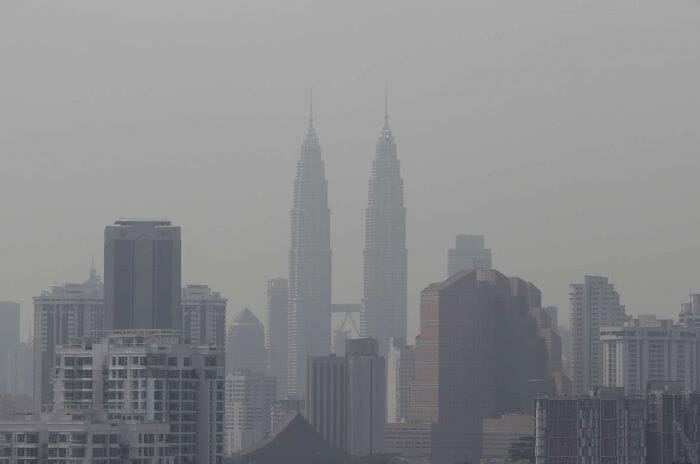
While the hazy conditions in Singapore cleared up by yesterday, heavy haze hit most parts of Kuala Lumpur, with air pollutant readings in the Malaysian capital reaching near "unhealthy" levels, Xinhua news agency reported. The 88-storey Petronas Towers were barely visible in the thick haze, which reached even the office of Malaysian Prime Minister Najib Razak, prompting him to tweet: "The haze is back in some areas, so please take healthcare measures, especially the old and the young."
Haze in Singapore has soared to hazardous levels, prompting government health warnings.
At 13:00 local time (05:00GMT) Singapore's pollution standards index (PSI) reached 371, breaking all previous records.
When it comes to good, clean air, Singapore trumps many of its South-east Asian neighbours, but its air quality still falls short of world standards. Link to the article on Eco-Business (September, 2010).
Blame the haze, a burgeoning car population, construction boom and growing industrial hubs like Jurong Island - all of which could potentially churn out plenty of smog that could have an impact on people’s health.
Dry-season forest fires in Indonesia produced a haze that blanketed Singapore in October, sent the Pollutant Standards Index (PSI) to its worst levels since 2006 and brought on a 20 per cent surge in the number of patients who went to the doctor for asthma or other chronic lung conditions.
But official statistics point to the fact that air pollution in Singapore has not worsened over the years.
The levels of six air pollutants have gone down slightly between 1999 and last year, according to the Yearbook of Statistics Singapore.
The main mitigating factors: regular inspections and checks, and industrial emission standards that are tightened every few years to match international standards and keep up with Singapore’s rapid growth. A National Environment Agency (NEA) spokesman said it does not expect air pollutant levels to vary significantly in the short term.
What may tip the levels would be ‘the future developments of Singapore’s economic structure, energy mix and consumption patterns, and lifestyle choices’, said the spokesman, adding that the agency will monitor such pollutants closely in the long run.
Still, fine particulate matter - its level in Singapore exceeds current limits set by the World Health Organisation - is a growing concern. These particles are fine enough to settle in the lungs and cause health problems, said doctors. Levels for even finer particles such as PM2.5, a pollutant 30 times smaller than the width of a strand of human hair, are also higher than ideal. Last year, the annual mean level was 19 micrograms per cubic m. The NEA aims to cut this to 12 micrograms per cubic m by 2020.
Any level of exposure to these particles will have some impact on health, said National University of Singapore climate scientist Matthias Roth. ‘That’s why these guidelines are always revised over time, and even those standards are not the last word, but they are supposedly achievable,’ he said.
The NEA measures several common pollutants in ambient air: sulphur dioxide, nitrogen dioxide, lead, PM10 which is particulate matter finer than 10 microns in size - about one-seventh the width of a strand of human hair, carbon monoxide and ozone.
It also checks the levels of volatile organic compounds that come from trade and industry. These are chemicals like solvents, which vaporise into the air at room temperature and cause eye and lung irritation in high quantities.
In lower doses, some of these can linger in the environment although their health effects at low exposure levels are not well understood.
While the agency has maintained that Singapore’s air pollution is well within the good range, residents, commuters and researchers say they would like more publicly available pollution information, and for the authority to keep a closer watch on the culprits.
The Straits Times looks at these everyday sources of outdoor air pollution here.
Haze: Health and air quality affected
Of all the outdoor air pollution that Singaporeans are subjected to every year, the haze probably wreaks more health havoc than any other. At least four respiratory specialists in private practice and the Changi General Hospital said they have seen a 20 per cent jump in the number of patients with asthma and chronic lung illnesses in October, a trend which generally mirrors those seen in previous haze seasons here in the last decade.
The Pollutant Standards Index (PSI), the indicator used here to measure air quality, crept into the unhealthy range - PSI 108 - for the first time in four years in October this year. Singapore has not managed to go a year without the haze in the last decade. In most years, it has been in the moderate range.
The haze - fumes blown this way from forest fires burning in Sumatra - contains minute ash particles known to trigger underlying health conditions. During the last bad haze episode in 2006, Singapore had several days of air in the unhealthy range, with the PSI peaking at 130. The worst recorded haze here was in 1997, when the air quality hit an all-time high of 226. Besides the haze, vehicle exhaust fumes and the oil industry also contribute to pollutants in the air here.
It is not known how many asthma patients there are here. The Asthma and Allergy Association, which dispenses medical advice to such patients here, does not track such figures. But one study comparing children between the ages of 12 and 15 in 1997 and four years later in 2001, showed the proportion of asthmatics increased from 9.9 per cent to 11.9 per cent.
The same study also noted the prevalence of adult asthmatics at around 2.4 per cent in men and 2 per cent in women.
Dr Augustine Tee, a consultant at the Respiratory Department at Changi General Hospital, says the number of patients he has seen in recent years has increased, partly due to greater awareness of the issue, which meant more people were coming forward to be treated. ‘But contributory factors like fluctuating air quality cannot be ruled out,’ he said.
Dr Cheng Tuck Hong from the Mount Elizabeth Hospital said a higher number of people with lung-related ailments here would mirror a trend seen in other major cities such as Hong Kong and Shanghai which also have heavily polluted air.
But Dr Cheng Yew Kuang, the president of the Asthma and Allergy Association here, said studies done in the last decade here show the number of asthmatics as a proportion of the overall population has remained constant.
Experts said that overall, Singapore’s air quality still compares favourably with other smog-filled cities in Asia, where people also have to contend with factors such as sharp temperature changes and the pollen season, which can trigger allergies.
Industrial: Working to clear the air
Earlier this year, a plume of black smoke rising from a refinery on the southern island of Bukom alarmed West Coast residents, who feared it could be noxious.
The National Environment Agency (NEA) gave the assurance that, although unusual, the smoke had not affected air quality on the mainland; however, complaints of polluted air from Johor refineries and odours of burnt cocoa from factories elsewhere pop up regularly in Internet forums like Stomp and punggol.org.
The NEA, concerned that the bad air problem will only intensify as industrial hubs like Jurong Island develop, is calling for expert help. It hopes to keep in check the particles more than 10 times smaller than the width of a human hair, and the levels of sulphur dioxide, which contributes to corrosive acid rain.
In its tender, it asked for consultants to compare Jurong Island’s current emissions with those of petrochemical parks overseas and recommend plans for the Jurong Island infrastructure and for individual companies to maintain air quality. The consultants will also forecast industrial emissions there for the next decade.
Eight companies have submitted bids for the rights to do the six-month study, which will not only look at suspended particles and sulphur, but also at carbon monoxide, nitrogen oxides, heavy metals and volatile organic compounds (VOCs).
Dr Lin Jianhua, the vice-president of the chemical and materials division of testing and certification company TUV SUD PSB, said high concentrations of VOCs can irritate the eyes and lungs, so they must be filtered out of indoor air, and cleaned before being discharged outside. She added that, as an added measure, a factory’s discharge pipes must stand taller than a certain height so pollutants do not linger close to the ground.
Industries can also switch to natural gas for power generation, which is cleaner than burning oil.
In some industries, however, avoiding pollutants is a challenge. Manufacturing solvent-based paints is a more pollutive activity than making water-based paints, but the continued demand for tougher solvent-based paints is driving its continued production.
Business at TUV SUD PSB has gone up 10 per cent since last year as a result of emissions standards becoming stricter every few years and businesses’ rising awareness of the ills of pollution, said Dr Lin. Emissions standards were last revised in 2008.
The NEA has 11 ambient air-quality testing stations here, but researchers here say it is not enough to work at improving air quality.
Dr Erik Velasco, a researcher with the Singapore-MIT Alliance for Research & Technology Centre for Environmental Sensing And Modelling, said during last month’s Better Air Quality conference here that Singapore was far from being a smoky and polluted industrial city, ‘but with the lack of publicly available air-quality data, we can’t conclude that Singapore has clean air.’
He said publicly available air-quality data, such as that made available by the US Environmental Protection Agency in real time, will enable scientists to pinpoint pollution sources and work out ways to clear the air.
Maritime: Using fuel with less sulphur
Long before man invented the car, bus or train, ships were the preferred mode of transport for adventurers seeking newer pastures.
But for years, the industry has harboured a dirty secret - that of hulking ships steaming through the ocean, coughing out plumes of black smoke.
In Singapore, the pollution contributed by the large oil refineries operating on Jurong Island, expanding vehicle population, and annual haze blown in from Indonesia has long been tracked by the authorities here.
But as one of the world’s major ports, with some 140,000 vessels calling here every year, air pollution caused by ships has so far fallen outside Singapore’s radar.
Ships carry 90 per cent of the goods traded by countries around the world, and with some estimates putting their contribution to global carbon emissions at 4 per cent - double the amount from the aviation sector - it has become a matter of concern for governments around the world and green groups.
That could well explain why the National Environment Agency has recently engaged a consultant to study the impact of emissions from ships that navigate Singapore waters. Unlike airplanes or cars, ships largely operate on cheaper residual oil, which has a sulphur content thousands of times greater than the diesel fuel used by taxis here.
Sulphur and nitrogen oxide fumes are tied to smog and acid rain, and can have a significant impact on the health of communities, especially those living near the coastline, noted Associate Professor Anthony Chin from the Centre for Maritime Studies at the National University of Singapore.
For example, an American study done in 2007 estimated that the health cost to societies in European and South Asian countries by ship emissions was US$255 billion (S$331 billion) every year. The same study also noted that 60,000 deaths a year in coastal communities in these regions were due to respiratory-related illnesses. But tracking this pollution is problematic, given that vessels tend to spend most of their time out in international waters, where they have not been subjected to any regulations, said experts. That is why ports, as ‘fixed facilities’, should take the lead by measuring the carbon emissions from ships docked there, said Prof Chin.
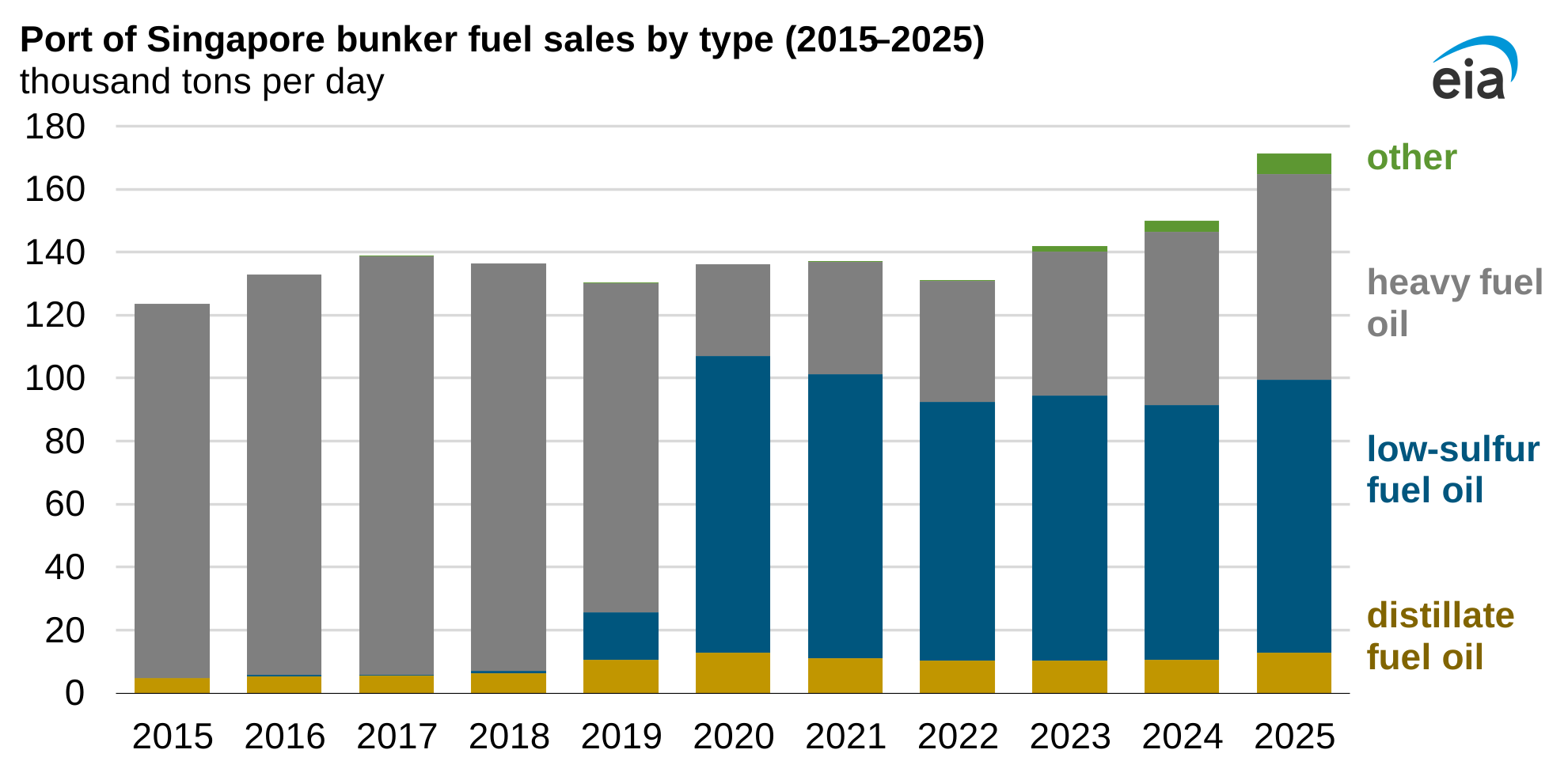
Some action has already been taken. The Maritime and Port Authority signed a global protocol which makes it compulsory for ships docking here to use higher grades of fuel - with less sulphur content - progressively. The global pact aims to reduce this sulphur content to 0.5 per cent by 2020. Now the challenge is to attract ship owners here, given that the move to higher grade fuels will add billions of dollars to their operating costs every year.
Vehicles: Some way to go to reduce fumes
New-car quotas may be slashed from next year, but there are still nearly a million vehicles here. With industries, they make up the bulk of air pollution in Singapore.
In fact, vehicle exhaust fumes could be the chief contributor to pollution in the air here, given that oil refineries primarily operate offshore, said Changi General Hospital’s Dr Augustine Tee, a consultant at its Respiratory Department.
Trucks and lorries belching black smoke are a common sight on the roads, even though smoky vehicles are against the law. The total number of such vehicles booked for the offence has gone down over the years, from 14,006 in 2005 to 8,865 last year. Between January and November this year, 8,523 local and foreign vehicles were booked by the National Environment Agency (NEA).
The agency has two stations which monitor roadside air quality and help it fine-tune its vehicle emissions control measures, such as tightening fuel and vehicle standards and enforcing smoky-vehicle rules more strictly.
But the data are not made public as ‘the public is not exposed to kerbside air quality 24 hours a day,’ said a spokesman, and the air quality there is therefore not representative of an average person’s exposure.
While cutting car numbers, switching to renewable fuels and boosting public transport help reduce air pollution, it is also important to look at fuel and vehicle emissions standards, say commuters and industry players. And Singapore’s fuel and vehicle emissions standards are well behind those of other Asian countries.
Singapore follows the Euro II emissions standard for petrol vehicles, the majority of cars here, and the more stringent Euro IV standard for diesel vehicles. In comparison, Thailand has adopted the cleaner Euro III emissions standards since 2007, and new cars in Hong Kong have had to meet the even more tough Euro IV petrol standards since 2006.
So why is air quality here better than in, say, Bangkok? The frequent breezes and rain here help flush pollutants out of the air, suggested Mr Clarence Woo, executive director of the Asian Clean Fuels Association, an advocacy group for cleaner fuels.
And enforcement may be less strict in other countries. Plus, the absolute number of vehicles is lower in Singapore, as is the number of vehicles per person.
Besides the vehicle emissions standards, the quality of the fuel counts too. Mr Woo wonders if fuel sold here lives up to the European emissions standards, as the data on fuel contents are not public, though they have to meet standards set by the authorities here.
The maximum sulphur content of petrol allowed to be sold here is 500 parts per million (ppm) while that of diesel is 50 ppm. The higher the sulphur content, the more sulphur dioxide they give off when burnt for fuel.
Even drivers like pilot and businessman Prithpal Singh are concerned. Mr Singh, 50, said he would like petrol companies to declare the pollutant contents of fuel, and that fuel standards should be upped for better fuel efficiency and less pollution. ‘We consider ourselves a first-world country, but our emissions standards are only Euro II,’ he said.
Already, the NEA is in talks with the oil industry to introduce Euro IV petrol, which has a maximum sulphur content of 50 ppm, and Euro V diesel (with sulphur at 10 ppm) in the next few years.
And by 2014 or 2015, Singapore aims to move to the Euro V standard for diesel vehicles, according to the Sustainable Development Blueprint, a government plan unveiled last year for the country to grow sustainably.
by Christian Tan, for CityScope More vehicles, more trips, more people -- but gridlock remain a rarity. What gives?
Singapore Singapore is a city on the move. Literally. Furiously. In cars. In buses. On rail lines. At rates of expansion that would make most transport executives blanch.
More and more people are moving - all the time. Three decades ago, they made 2.7 million daily trips. Now it's more than 11 million - in cars, buses and trains. Yet Singapore has little of the congestion that almost paralyzes so many cities around the world.
What's the secret? It's simple. Early planning. Timely action. Massive investment across many modes of transport.
Density without gridlock
Not that Singapore's situation is simple. This sovereign state is just 710 square kilometers -- a bit bigger than New York City. It has 5 million people -- more than double its population 30 years ago. Now, close to 1 million vehicles (of which 40,000 are from across the Malaysian border) zip around in a network of well-paved roads spanning 3,400 kilometers.
And in contrast to neighboring cities such as Jakarta, Bangkok, and Kuala Lumpur - and indeed, farther flung examples such as London, Paris and Los Angeles -- gridlock is a rarity in Singapore.
This is despite growing car ownership. Back in 1981, there were 163,355 passenger cars here. Today, there are 570,000. Yet Singapore's average car speed on arterial (main) roads during peak hours is 27 kmh (17 miles per hour), compared to as low as 16 kmh in London, 11 kmh in Tokyo and 5 kmh in Jakarta.
Clues to the formula
So, how has Singapore managed this seemingly text book success story on urban mobility?
Mr. Lew Yii Der, group director for policy and planning of the country's Land Transport Authority (LTA), says the the recipe "boils down to two important ingredients: a convenient and well-connected public transport network, and an effective set of demand management measures to regulate traffic flow and keep road congestion in check."
As a relatively young nation (gaining independence in 1965), Singapore's bureaucracy of scholars and technocrats had the advantage of learning from older, more established cities. Urban planning soon became the government's forte, and transport infrastructure a cornerstone of development.
Expanding on a blueprint drawn by the country's British colonial masters, policy makers began to build new roads -- lots of them. Starting in the early 1970s, Singapore opened the first of what today is a network of nine expressways crisscrossing the island, including such technological marvels as a 12-km long, largely underground expressway opened two years ago, and an upcoming (in 2013) link that not only goes underground but undersea.
But like all other modern cities, roads are rarely sufficient to move the masses. Singapore opened its first rail transit line -- 6 kilometers, five stations - in 1987. Today, the rail network spans over 150 km (94 miles), with 106 stations serving four mass rapid transit lines (one partially opened) and three light rail transit lines.
Major added investment -- $40 billion in Singapore dollars (U.S. $28.4 billion) -- is committed to expanding rail lines to 280 km by 2020.
With this ambitious expansion, the current balance in Singapore's average daily trips of 11 million (6 million by private transport, 3 million by bus and 2 million by rail) is likely to shift significantly toward public transit (even with some additional roads).
LTA Rail Group Director Mr. Chua Chong Kheng recalls: "Since the first steps were taken... on Oct 22, 1983, the government has invested heavily to ensure that the rail network form the backbone of an efficient public transport system."
Key ingredient: congestion pricing
Policymakers recognized early, in fact, that that a country as small and dense as Singapore cannot rely solely on road expansion. Demand for road space must be held in check. And the best way to do that, they discovered, are user charges.
Literally decades ahead of European cities, Singapore in 1977 instituted an "Area Licensing System" featuring stiff fees for any car entering downtown Singapore during business hours. In 1998, this congestion pricing system went high-tech with an electronic road-pricing system that requires any vehicle in Singapore (as well as those coming in from Malaysia) be fitted with a stored-value card reader.
As a car passes any of the city's 69 gantries (electronic checkpoints), the card reader charges a fee, which varies significantly depending on time of day. For someone driving into the city during the morning rush hour, tolls across multiple gantries often add up to S$10 a day.
Following Singapore's lead, congestion pricing for traffic-clogged cities has since been adopted by London, Oslo, Stockholm, and Milan. Mayor Michael Bloomberg also proposed the idea in New York City, but was overruled by the New York State Legislature.
Also key: paying for the right to use a vehicle
Singapore in 1990 inaugurated a second method for keeping auto use in check. Anyone who wants to buy a vehicle must first secure a "Certificate of Entitlement," valid for 10 years. Certificates are auctioned off twice a month.
The price today hovers around S$20,000 in Singapore dollars, but it has been as high as S$110,000. On top of that, Singapore motorists pay 44 cents in duty for every liter of fuel they use (roughly $1.75 a gallon in the U.S.).
Pulling it off
But how has Singapore managed to implement controversial policies such as congestion pricing and the expensive auto "certificates of entitlement" when several other cities have tried launching similar systems but failed?
A unified local government with strong leadership has surely been a major factor.
But there have also been persuasive politics. The LTA, for example, softened the blow of the auto certificates of entitlement by lowering car registration taxes which had previously been a stunning 200 percent of the value of new vehicle. And trains and buses have relieved the crush on the roads -- "an effective public transport system that is a viable alternative" to driving, in the words of LTA Director of Road Operations Dr. Chin Kian Keong (who was also one of the authors of the road pricing system).
Observers do not disagree that the public transport system is on the whole effective. But they point out that commuter complaints about packed trains and long bus arrivals have grown louder in recent years, largely because of Singapore's population growth.
Not only that, road traffic has grown noticeably heavier in the past five years.
The city has initiated a slew of responses, including higher driving charges, more frequent train service, more bus lanes -- plus the S$50 billion worth of rail and road projects scheduled for completion by 2020.
Transport Minister Raymond Lim has an ambitious goal: to increase the percentage of public transit trips during morning rush hours from 59 percent in 2008 to 70 percent in the next 10 years. To do this, he acknowledges that public transport has to be as convenient and nearly as speedy as driving.
Analysts applaud the efforts, but some say more needs to be done immediately. Transport researcher Dr. Lee Der Horng, an associate at the National University of Singapore, says: "I am concerned by the peak-hour capacity on our public transport system, and the increased congestion levels on our roads."
Member of Parliament Lim Wee Kiak, who also heads a policy-monitoring committee, believes Singapore may face a serious transport crunch if not more is done between now and 2020. "We have an acute problem now that needs fast solutions in the short and medium term," he notes.
Despite the complaints, a Gallup world poll of 20 cities in 2008 found that Singaporeans were the most satisfied with their public transport system. Whether they will still be so in the next few years remains to be seen.
A new report "Electronic Road Pricing - Experience & Lessons from Singapore" is released as SIM-air working paper series No.33.
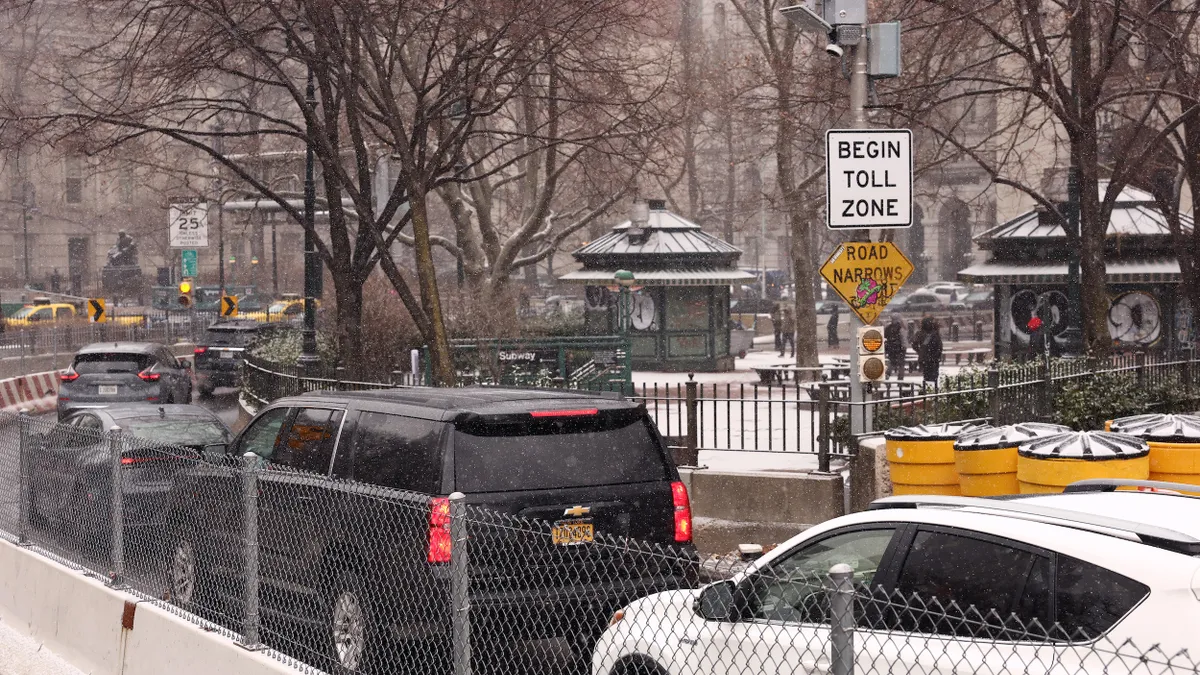
Singapore is the first city in the world to implement electronic road pricing (ERP) in September 1998. The ERP or congestion pricing system was successful for one important reason - the city operates a widely accessible public transport system (road and rail) which can support the shift to car-free transport. Given the current traffic demand trends, the ERP is a measure that many Asian cities will be forced to consider as traffic conditions become more acute.
This paper (with Prof. Gopnath Menon, NTU, Singapore) presents an overview of how ERP was implemented in, experiences and lessons from, Singapore.



.jpg)

 Maritime: Using fuel with less sulphur